Custom Dental Laboratory Services: Finding the Right Partner for Your Practice
Find the right full service dental lab in California by evaluating services, communication, digital workflows, quality control, turnaround times, and support.
Key Takeaways
- Choosing the right laboratory involves more than comparing pricing and turnaround times; communication, quality control, and workflow support also matter.
- A full-service dental laboratory can help practices coordinate design, fabrication, revisions, and related laboratory services through one partner.
- Before choosing a lab, evaluate its experience, digital capabilities, case communication, quality-control processes, and revision policies.
- A reliable long-term laboratory partner should support your practice with consistent craftsmanship, clear communication, and dependable workflows.
Choosing a laboratory partner is about more than finding someone who can manufacture a crown or prosthesis. For a dental practice, the right lab should understand clinical instructions, communicate clearly, work consistently with digital files, and deliver restorations that reflect the treatment plan. When searching for a Full service dental lab in California, practices should look beyond price and turnaround time and evaluate the entire working relationship.
This guide explains what to look for, who provides these services, and how to assess whether a laboratory can genuinely support your practice.
Who provides custom dental laboratory services for dental practices?
Custom dental laboratory services are typically provided by commercial dental laboratories and specialized dental laboratory technicians who work from prescriptions, scans, impressions, and detailed instructions supplied by dentists. These professionals may fabricate crowns, bridges, dentures, veneers, implant restorations, and other dental prostheses.
The American Dental Association explains that dental laboratory technicians combine technical and artistic skills to create custom dental appliances and restorations while working as part of the broader dental care team.
For practices handling complex restorative or digital cases, the difference between a basic production vendor and a true laboratory partner often comes down to communication, workflow integration, and accountability.
What should you expect from a custom dental laboratory?
A capable laboratory should fit into your clinical workflow rather than create another layer of coordination.
When evaluating a custom dental laboratory in California, consider whether the lab can support the types of cases your practice handles regularly. Services may include:
- Digital dental design and CAD/CAM workflows
- Crown and bridge restorations
- Implant and full-arch cases
- Final prosthesis fabrication
- Restoration redesigns
- Analog-to-digital conversion
- Case consultation and workflow support
- Quality control before final delivery
A useful rule of thumb is to evaluate the lab based on your most demanding cases, not your easiest ones. Ask how the team handles revisions, unclear scans, changes in treatment plans, and cases requiring direct designer or technician communication.
Why communication matters as much as craftsmanship
A technically skilled lab can still become difficult to work with if communication is inconsistent.
Before choosing a partner, find out who will answer questions about a case. Will your team communicate directly with the person designing the restoration, or will every question move through a general support channel?
Clear communication is particularly valuable when margins, occlusion, aesthetics, implant positioning, or other case-specific details require clarification. Early conversations can prevent misunderstandings from becoming chairside adjustments later.
For practices modernizing their digital workflows, our guide, How to Choose the Right Dental Workflow Consultant for Your Practice, offers additional considerations around laboratory coordination, technology integration, and workflow assessment.
Full-service vs. specialized dental laboratories
Not every practice needs the same laboratory model. The right choice depends on case volume, services required, and how much coordination your team wants to manage.
| Consideration | Full-Service Lab | Specialized Lab |
|---|---|---|
| Range of services | Broad | Focused |
| Multiple case types | Often suitable | Depends on specialty |
| Single point of contact | Often available | Varies |
| Complex workflow coordination | Can be streamlined | May require multiple providers |
| Best fit | Practices seeking consolidated support | Practices needing highly specific expertise |
A dental restoration lab in California may be appropriate when a practice needs dependable restorative production, while a full-service partner can be useful when design, fabrication, revisions, and related workflow support need to stay coordinated.
What should you check before choosing a laboratory?
Start with the practical details. Ask prospective laboratories:
- What cases do you handle most often? Make sure their experience matches your clinical focus.
- How does case communication work? Determine whether you can reach a knowledgeable technician or designer when clarification is needed.
- What quality-control steps are used? Ask how cases are reviewed before shipment and how discrepancies are addressed.
- What are the realistic turnaround times? Look for clearly communicated timelines rather than promises that sound too good to be true.
- How are revisions handled? Understand the process before your first complex case, including who evaluates the issue and how corrections are coordinated.
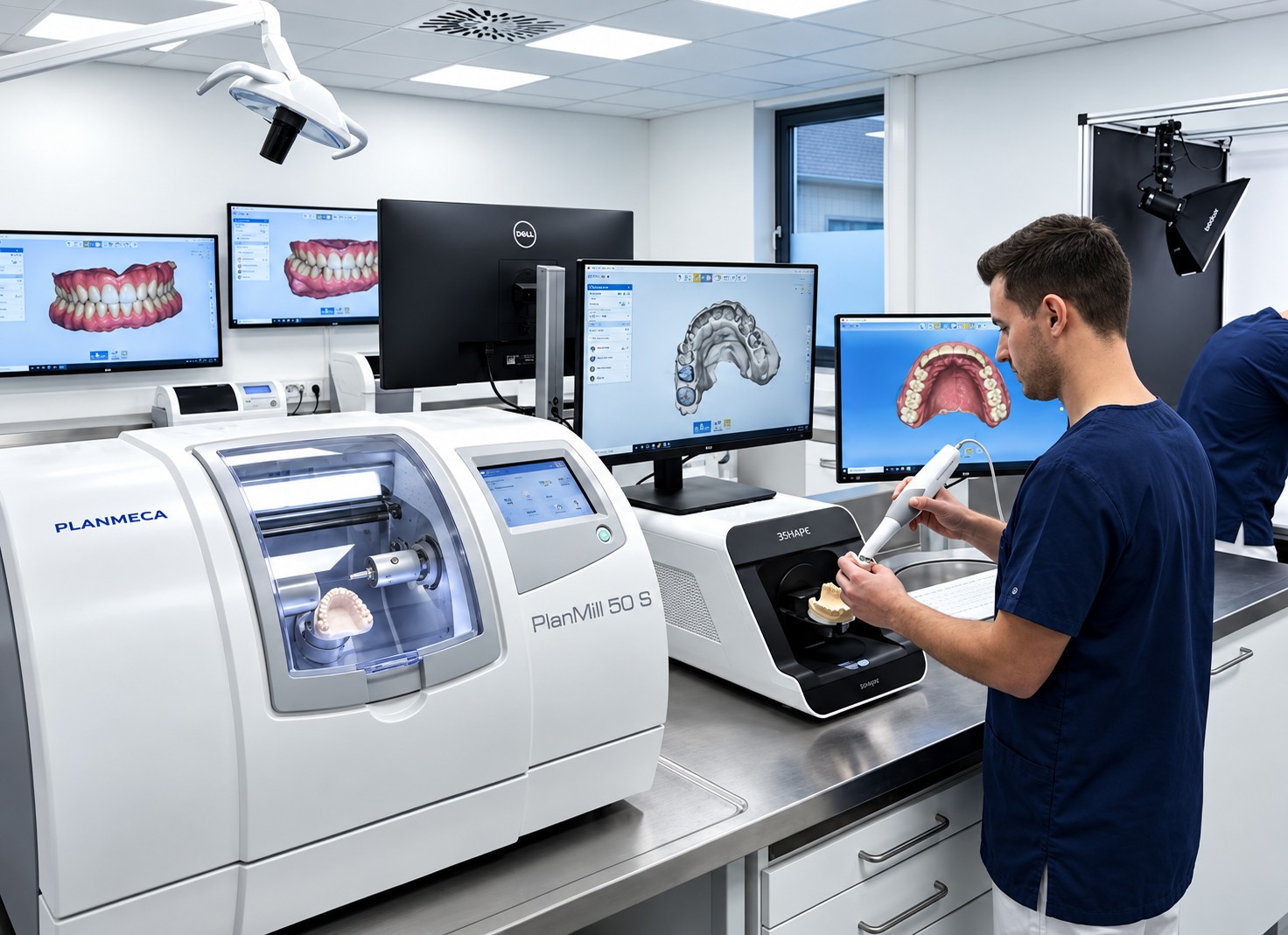
- Can the laboratory support your digital workflow? If your practice uses intraoral scanning and digital case submission, confirm that the laboratory can work comfortably with your systems and file requirements.
When does a full-service partner make sense?
A full service dental lab can be particularly useful for practices that want design and final fabrication coordinated through one team. JCR AOX Designs, for example, provides digital case design, final restorations, redesign support, analog-to-digital services, and consultation and training through its full-service laboratory offering.
The practical advantage of an integrated model is accountability. When design and fabrication are handled by different providers, each handoff introduces another opportunity for information to be misunderstood or lost. Keeping related stages together can make communication simpler and help preserve the dentist's original treatment intent.
What makes a dental laboratory a long-term partner?
Strong laboratory relationships rely on consistent quality, clear communication, and reliable processes. When comparing a dental prosthetic lab in California, consider craftsmanship, technology, turnaround time, quality control, and case support. The right partner should simplify your restorative workflow and provide dependable support as your practice grows.
Ready to simplify your dental laboratory workflow?
Explore JCR AOX Designs' full-service laboratory solutions and find the support your practice needs.
Frequently Asked Questions
Ethan Navarro
Hello, I'm Ethan Navarro, a California-based digital dental design specialist with extensive experience supporting clinicians through advanced CAD/CAM workflows, full-arch restorations, implant planning, and restorative design. I'm passionate about helping dental professionals simplify complex cases by combining precision, collaboration, and innovative digital solutions. Through my articles, I share practical insights on digital dentistry, laboratory workflows, restorative techniques, and emerging technologies that help practices improve efficiency, strengthen communication, and deliver predictable patient outcomes.
Work with our team