Dental CAD Design for Restoration Redesign in California
Struggling with restoration remakes? Discover how expert dental CAD design services in California streamline redesigns and boost lab efficiency.
Why Do Dental Restorations Need to Be Redesigned?
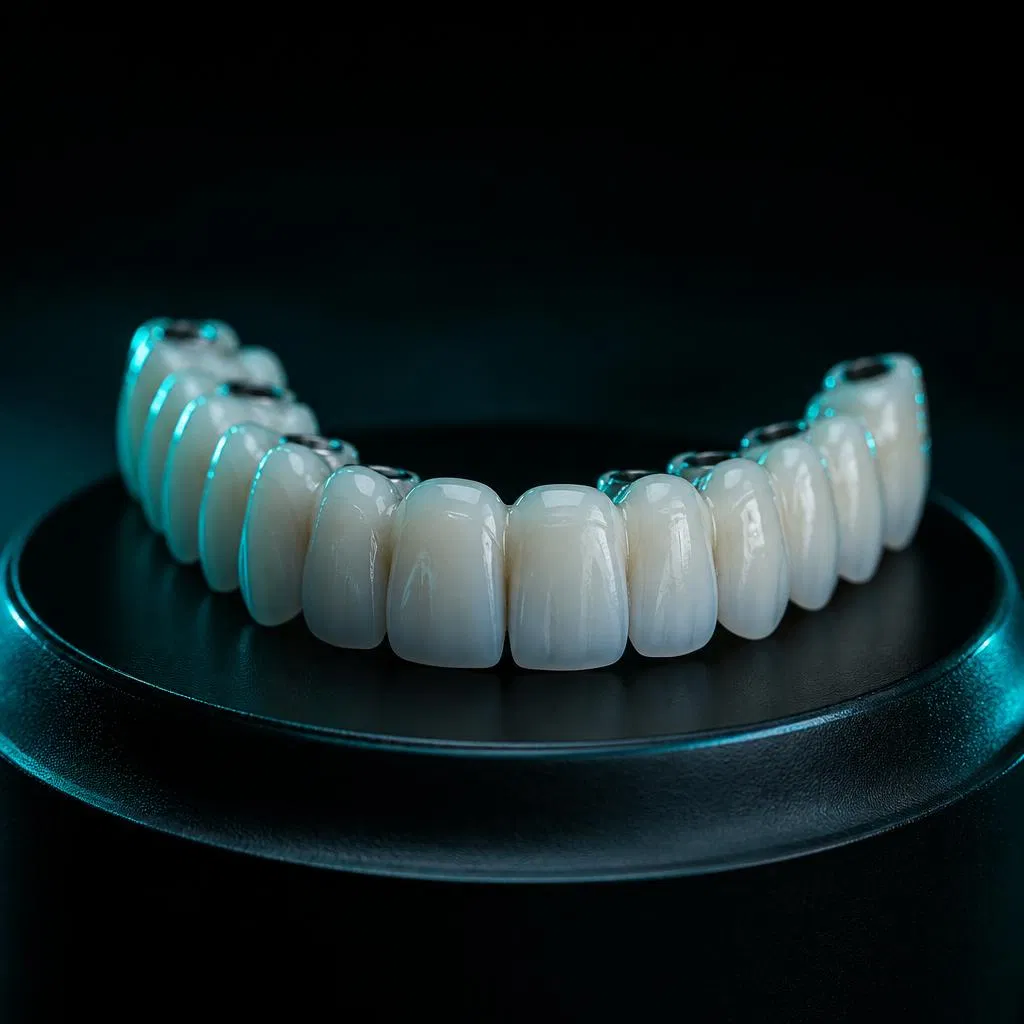
Every dental lab has faced it: a crown, bridge, or implant restoration comes back from the dentist with a note that says "doesn't seat" or "occlusion is off." Before a full remake, most of these issues can actually be traced back to a design-stage problem, not a fabrication one.
A poorly captured margin, an inaccurate contact point, or an emergence profile that doesn't match soft tissue contours can all lead to chairside adjustments, patient discomfort, or outright rejection of the case. This is where dedicated dental restoration design in California becomes valuable, technicians who specialize in reviewing and correcting existing CAD files rather than starting over.
Instead of scrapping hours of milling, printing, and material costs, a redesign specialist can open the original scan data, isolate the flaw, and rebuild only what's necessary. It's faster, more cost-effective, and reduces the back-and-forth between the lab and the treating dentist.
Common Reasons Restorations Get Sent Back
Understanding why a case fails design review helps labs prevent it next time. The most frequent culprits include:
- Inaccurate margins, often from a rushed scan or poor tissue retraction
- Occlusal interferences: Bite contacts that weren't verified against opposing arch data
- Contour or emergence profile errors, leading to food impaction or unnatural gum lines
- Shade or anatomy mismatches, especially on anterior restorations where esthetics matter most
- Implant angulation issues: Screw-access channels that don't align with the planned trajectory
Each of these can usually be resolved through careful digital redesign rather than a full case restart, which is exactly the kind of work skilled CAD teams take on daily. You can see how a full redesign workflow is structured on our dental restoration redesign services page.
How Does the Redesign Process Work?
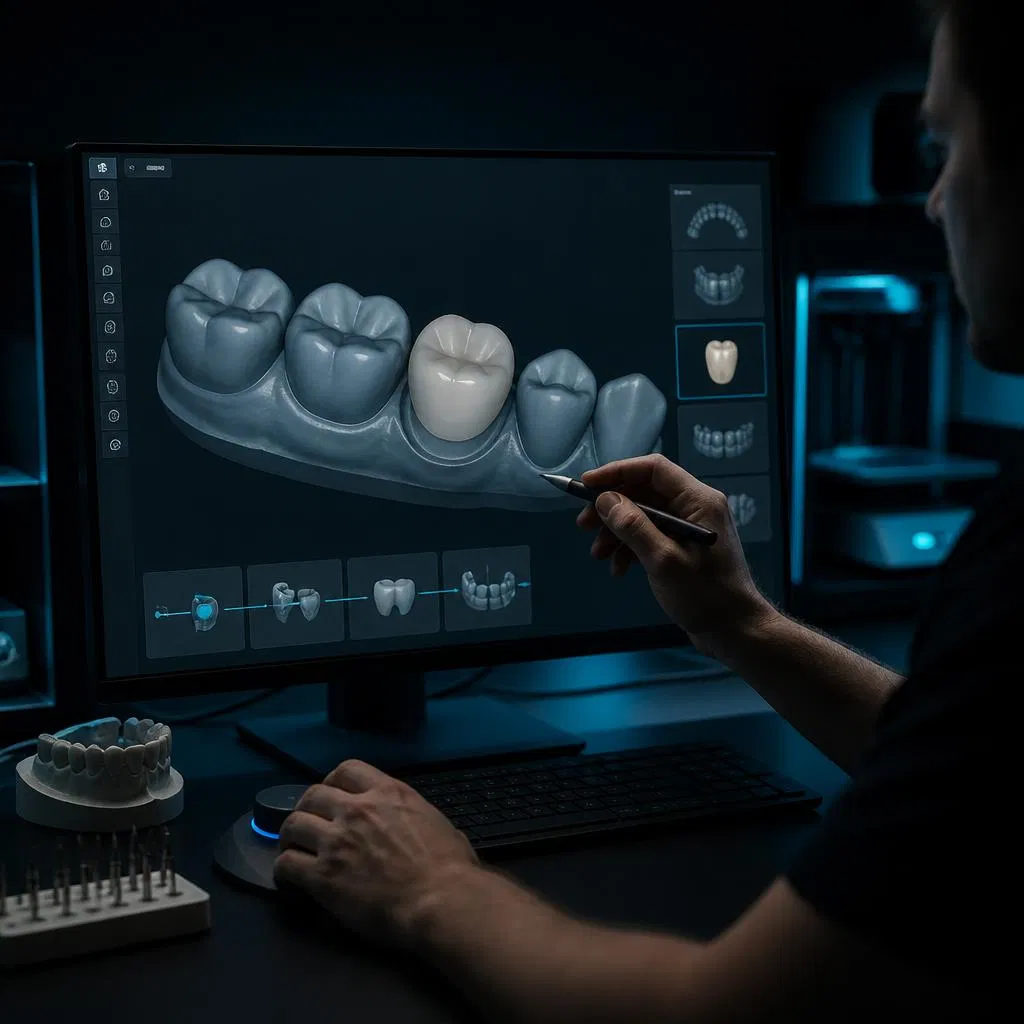
A typical redesign starts with reviewing the original STL files, scan data, and any notes from the dentist, then isolating and correcting the specific flaw, such as a margin, contact point, or occlusal contour, before re-exporting the corrected design for milling or printing.
The process generally follows these steps:
- File and case review: The designer examines the original scan, design software file, and dentist's remake notes.
- Issue isolation: The specific error (margin, contour, occlusion, etc.) is identified using digital calipers and bite analysis tools.
- Digital correction: The restoration is reshaped within the CAD software, referencing adjacent teeth and opposing arch anatomy.
- Quality verification: The corrected file is checked against occlusion, contact, and esthetic standards before approval.
- Export and delivery: The finalized file is sent back to the lab for milling, printing, or further fabrication.
Because this workflow depends heavily on precise digital modeling, labs increasingly turn to specialists in dental CAD design in California to handle redesigns without pulling in-house technicians off new case production.
In-House Redesign vs. Outsourced CAD Design
| Factor | In-House Redesign | Outsourced Redesign Specialist |
|---|---|---|
| Turnaround time | Depends on current workload | Often faster, dedicated focus |
| Cost | Fixed staff overhead | Pay-per-case flexibility |
| Expertise | Varies by technician | Specialized in troubleshooting remakes |
| Software versatility | Limited to lab's system | Typically trained across multiple platforms |
| Scalability | Harder during busy periods | Easily absorbs case spikes |
Many labs find that a hybrid approach works best, handling routine cases internally while sending complex or high-volume redesign work to outside specialists.
Who Provides Dental CAD Design Services for Restoration Redesign in California?
Dental labs, milling centers, and even individual dental practices across California work with specialized CAD design providers who focus specifically on correcting and refining existing restoration files. These providers typically employ certified dental technicians experienced in intraoral scanning software, occlusal analysis, and implant planning platforms, allowing them to troubleshoot a wide range of restoration issues without requiring a full remake from the ground up.
If your lab is evaluating a redesign partner, it helps to review their turnaround guarantees, software compatibility, and case history for similar restoration types. You can learn more about what sets a redesign team apart on our why choose us page.
Tips to Reduce Redesign Requests in the First Place
While redesign services are a valuable safety net, fewer remakes ultimately save everyone time. A few best practices help:
- Verify scan accuracy chairside before submitting the case
- Include clear written notes on shade, contact preferences, and occlusal scheme
- Double-check opposing arch data is included with every scan
- Use standardized digital impression protocols across your practice or lab
Even with careful protocols, occasional redesigns are unavoidable, which is why having a reliable dental prosthetic design in California partner on call matters for consistent case turnaround.
Final Thoughts
Restoration remakes don't have to mean starting from zero. With the right digital workflow and an experienced redesign partner, labs and dentists can correct fit, contour, and occlusal issues quickly while protecting both timelines and margins. If you're exploring redesign support for your next case, our redesign services page outlines exactly how the process works from submission to final file delivery.
Looking for more insights on digital dentistry workflows? Check out our blog for related articles, or get in touch with our team to discuss your next case.
Key Takeaways
- Restoration redesigns are often due to fit, contour, or occlusion errors that can be corrected digitally rather than remaking a case from scratch.
- Skilled CAD technicians use scan data and margin analysis to fix design flaws, saving labs time and material costs.
- Outsourcing redesign work to specialized designers helps labs maintain turnaround times without adding in-house staff.
- Clear communication amongst the dentist, lab, and designer is the biggest factor in reducing repeat remakes.
FAQs
Ethan Navarro
Hello, I'm Ethan Navarro, a California-based digital dental design specialist with extensive experience supporting clinicians through advanced CAD/CAM workflows, full-arch restorations, implant planning, and restorative design. I'm passionate about helping dental professionals simplify complex cases by combining precision, collaboration, and innovative digital solutions. Through my articles, I share practical insights on digital dentistry, laboratory workflows, restorative techniques, and emerging technologies that help practices improve efficiency, strengthen communication, and deliver predictable patient outcomes.
Work with our team