From Scans to Smile: A Day in the Life of a Digital Dental Case
How a single case moves from intraoral scan to finished restoration, and why the hours in between decide whether a digital workflow actually works.
Key Takeaways
- A well-run digital case typically moves from scan to finished design in 3 to 4 business days, not the 2 to 3 weeks common with analog impressions.
- Most rework doesn't happen on the bench. It happens because a scan or prescription issue wasn't caught during case intake.
- Same-day first iterations are realistic for single-arch cases; full-arch designs generally need an extra design cycle.
- Direct designer-to-doctor conversation, not a support ticket queue, is what actually compresses turnaround time.
- Choosing digital dental design services in california with a transparent, staged workflow gives doctors predictable delivery dates instead of guesswork.
What Actually Happens Between Scan and Seat
Ask a patient what happens to their scan after they leave the chair, and you'll usually get a shrug. Ask the dentist, and the answer is often just as vague: "it goes to the lab, and a few days later a design comes back." That gap, the part nobody sees, is where cases are quietly won or lost. A predictable, well-communicated digital workflow is the difference between a restoration that seats correctly the first time and one that bounces back for a second or third revision.
At JCR Aox Designs, every case follows the same staged path from first scan to final delivery. Below is what that path actually looks like on a typical day, and why each step matters more than it seems.
8:30 AM — The Scan Lands
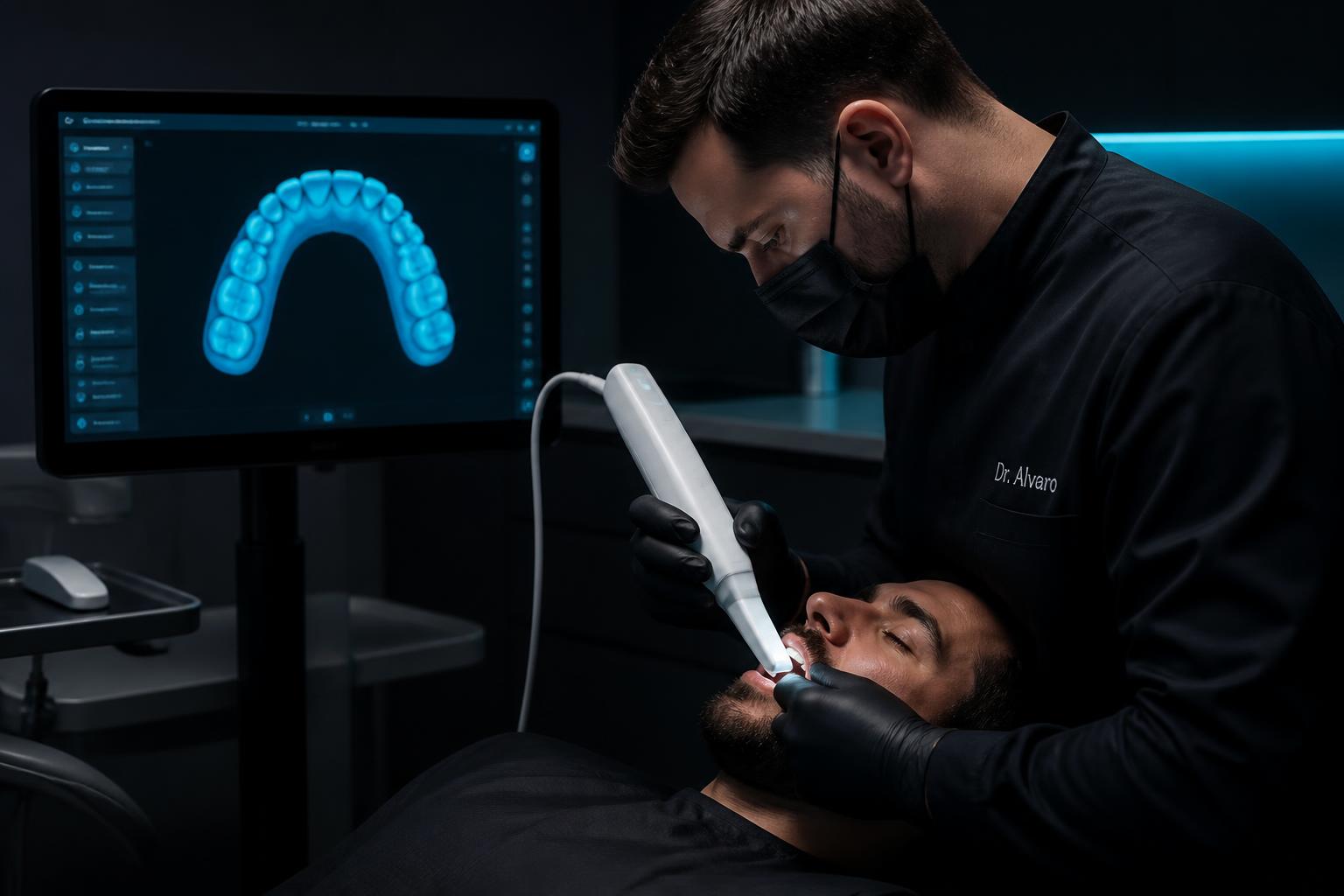
The workflow starts in the operatory, not at the lab. A modern intraoral scanner captures the arch in well under ten minutes, and the file uploads automatically before the patient even leaves the chair. There's no impression tray, no disinfecting, no waiting on a courier. The moment the scan is captured, it's already in transit, and a designer is notified within minutes that a new case has landed.
This single change, going from a physical impression to a digital file, is the biggest reason digital workflows outrun analog ones. There's nothing to ship, nothing to distort in transit, and nothing sitting in a drawer waiting for a pickup.
9:15 AM — Case Intake and the Five-Minute Call
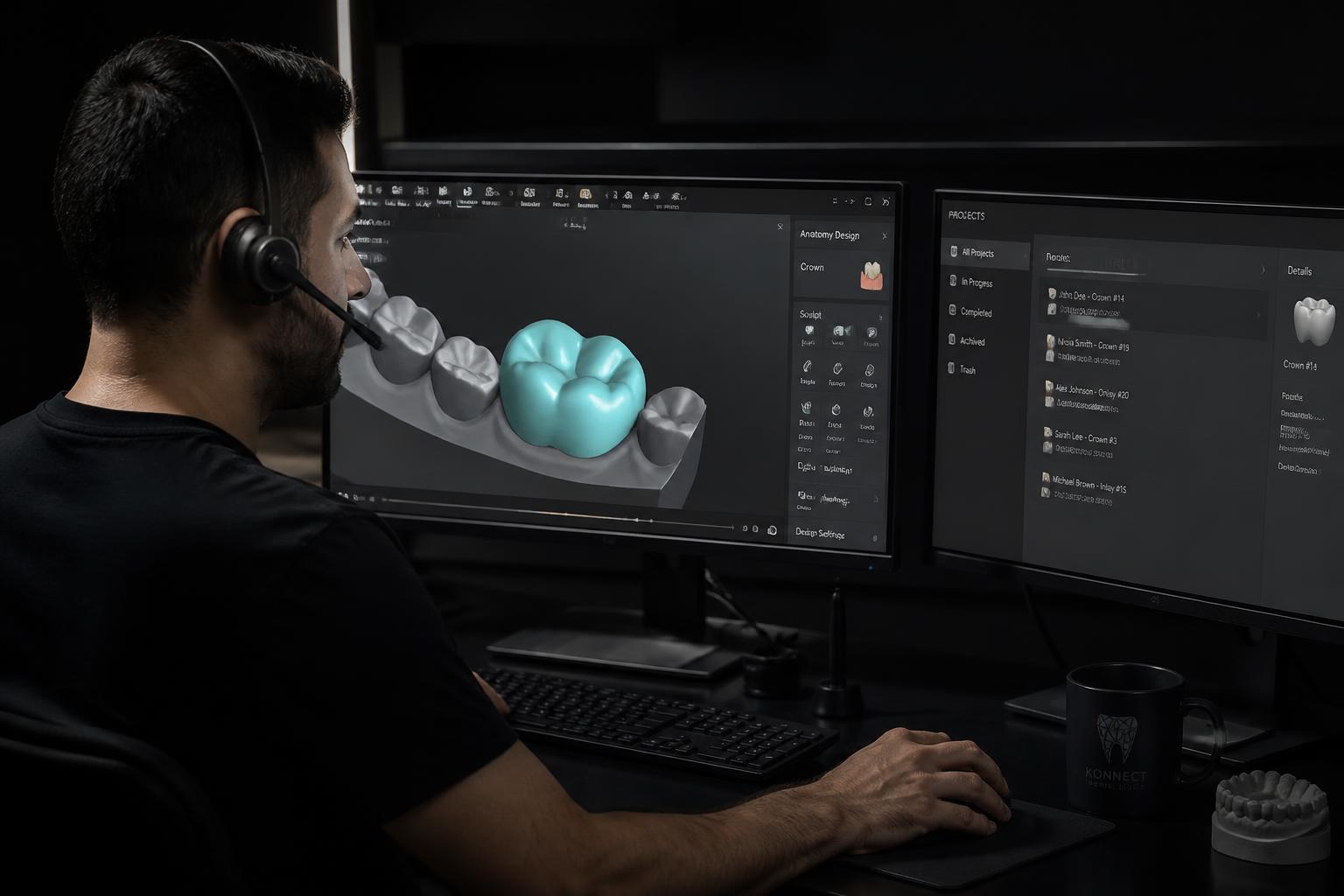
Before any modeling begins, the designer reviews the scan, the photos, and the prescription together. This is the step most workflows skip, and it's the single biggest predictor of whether a case will need rework later. If margins are unclear, a bite registration looks off, or the prescription is ambiguous, the call goes back to the doctor immediately, before a single tooth is designed.
A five-minute phone call at 9:15 AM is a rounding error. The same issue discovered after a full design cycle costs a full day, sometimes more if the doctor is out of office when the design comes back. Catching problems at intake is what keeps a three-day case a three-day case.
By 4:00 PM — First Iteration Returns
For most single-arch cases, an initial design is back with the doctor the same afternoon. Full-arch cases, which involve more planning around occlusion, implant positions, and esthetics, typically follow the next morning instead. Either way, the doctor reviews the design, marks up anything that needs adjusting, and sends it back.
This is where a direct line to the actual designer matters. When a redline goes to a real person who already knows the case, rather than into a general support queue, revisions typically turn around within the hour instead of getting requeued behind other practices' cases.
Day 3 — Final Delivery
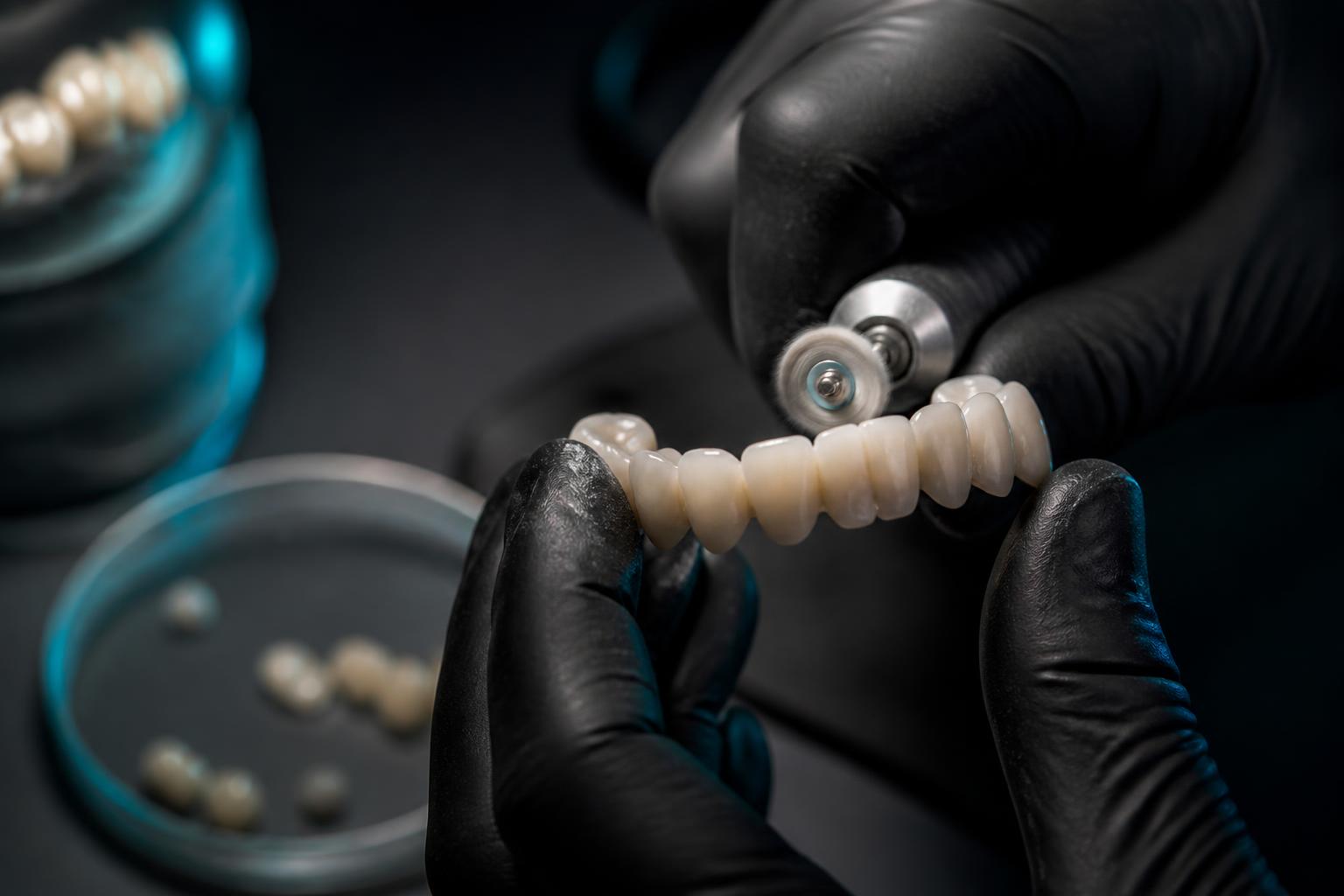
Once the doctor approves the design, it moves into finishing. This includes quality checks, premium ART OF ARCHES finishing work, and final packaging before it ships back to the practice. For most cases, that means the patient who was scanned on day one is being seated with their final restoration within the same week the case started.
Why the Turnaround Gap Is Bigger Than It Looks
It's easy to treat "a few extra days" as a minor inconvenience, but the numbers tell a different story. According to a 2021 survey published by the American Dental Association's Clinical Evaluators Panel, roughly half of U.S. dentists were already using intraoral scanners in their practices.
The gap between analog and digital case workflows adds up quickly across a full patient schedule, which is why efficiency was the top reason dentists gave for switching to scanning in the first place. The table below compares what a typical case looks like under each approach.
| Factor | Traditional Analog Impression | Digital Case (JCR Aox Designs) |
|---|---|---|
| Chairside capture time | 15–20 minutes, plus retakes for distortion | Under 10 minutes, one pass |
| Transit to lab | 1–3 days by courier or mail | Instant upload, same minute |
| First design turnaround | 5–10 business days | Same day (single arch) to next morning (full arch) |
| Revision cycle | Often another full shipping cycle | Typically under 1 hour with direct designer contact |
| Total scan-to-delivery | 2–3 weeks common | 3–4 business days typical |
Digital Adoption Is Now the Norm, Not the Exception
Doctors weighing whether to lean further into digital workflows aren't early adopters anymore, they're following the market. Independent research groups tracking intraoral scanner use put adoption in mature markets like the United States at roughly a third of practices and climbing, with orthodontics and restorative cases leading the way. The figures below summarize where the industry currently stands.
| Metric | Reported Figure | Source |
|---|---|---|
| U.S. dentists using intraoral scanners | ~53% | ADA Clinical Evaluators Panel, 2021 |
| Practices citing efficiency as top reason to scan | 70% | ADA Clinical Evaluators Panel, 2021 |
| IOS penetration in mature markets (U.S.) | 30–35% | Fortune Business Insights market report |
| Global IOS market growth (2025–2033 CAGR) | 7.2% | Straits Research market report |
The Real Takeaway
None of this works because of the scanner itself. Plenty of practices own a scanner and still wait two weeks for a design. What actually compresses the timeline is what happens around the file: a designer who reviews the case before modeling, a doctor who can reach that same designer directly, and a finishing process that doesn't sit in a queue.
That's the operational difference behind reliable digital dental design services in california, and it's why the gap between a scan and a seated patient keeps shrinking for practices that treat the design phase as a partnership rather than a drop-off.
Frequently Asked Questions
Ethan Navarro
Hello, I'm Ethan Navarro, a California-based digital dental design specialist with extensive experience supporting clinicians through advanced CAD/CAM workflows, full-arch restorations, implant planning, and restorative design. I'm passionate about helping dental professionals simplify complex cases by combining precision, collaboration, and innovative digital solutions. Through my articles, I share practical insights on digital dentistry, laboratory workflows, restorative techniques, and emerging technologies that help practices improve efficiency, strengthen communication, and deliver predictable patient outcomes.
Work with our team