Full-Arch Cases: Why Same-Week Turnaround Is Changing Implant Dentistry
Two weeks used to be an acceptable wait for a full-arch case. In 2026, it is a reason patients walk. Here is what actually compressed the timeline, what the clinical data says about doing it safely, and what faster delivery unlocks for a practice.
Two weeks used to be an acceptable wait for a full-arch case. In 2026, it is a reason patients walk. Here is what actually compressed the timeline, what the clinical data says about doing it safely, and what faster delivery unlocks for a practice.
Key Takeaways
- Digital scanning, dedicated designers, and direct doctor-to-designer communication have cut full-arch turnaround from weeks to days.
- Traditional analog workflows often needed 3+ appointments and 10+ lab days; digital workflows now close comparable cases in about one visit and roughly three turnaround days.
- Published research on digital, immediate-loading full-arch protocols reports implant survival rates consistently in the 92% to 98% range at 12 to 24 months.
- Faster turnaround increases case starts per month, reduces second-appointment no-shows, and improves case acceptance because patients see results in days, not weeks.
- Reliable, predictable delivery timelines give doctors back schedule flexibility instead of guesswork.
This shift is not cosmetic. It is the difference between a lab that fits around a courier schedule and one built around digital dental design services in California, where scans move electronically, a designer reviews the case the same day, and revisions happen over a phone call instead of a shipping label. That single change in infrastructure is what makes same-week turnaround possible at all.
What Actually Compressed the Timeline
Full-arch turnaround used to be measured in weeks because every step in the process depended on something physical moving from one place to another: a tray of impression material shipped to a lab, a stone model poured and trimmed by hand, a case file mailed back for a doctor's signature. Each handoff added days, and each revision request restarted the clock.
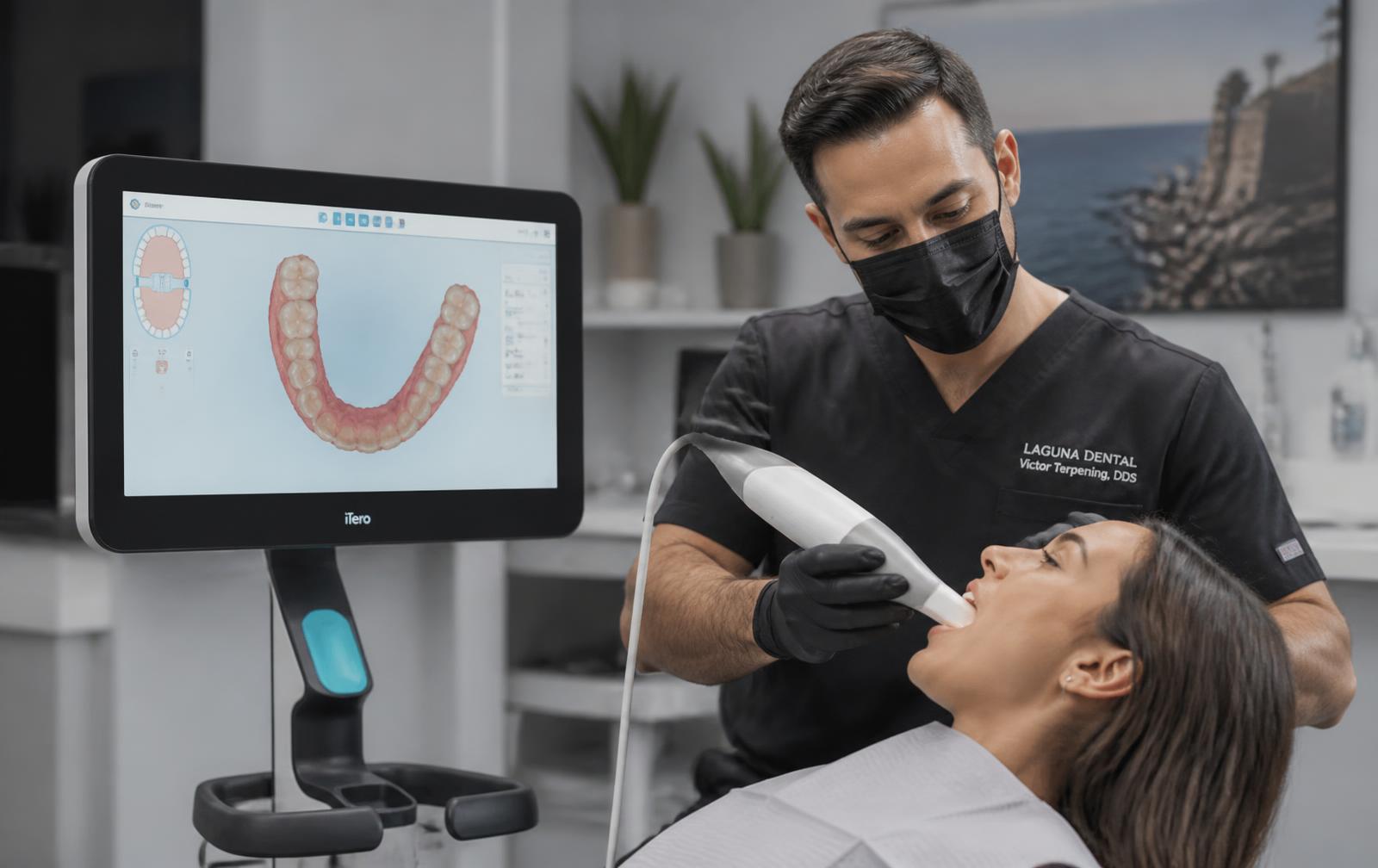
Three changes broke that cycle. First, faster intraoral and photogrammetry scanners replaced physical impressions, so a full arch can be captured chairside in minutes and transmitted instantly. Second, dedicated digital designers took over case files instead of a rotating queue, which means one person owns the case from scan to delivery and knows the history without re-reading notes. Third, direct communication between the treating doctor and the designer replaced the case-portal-and-courier model, so a question that used to take two days to answer now takes a phone call.
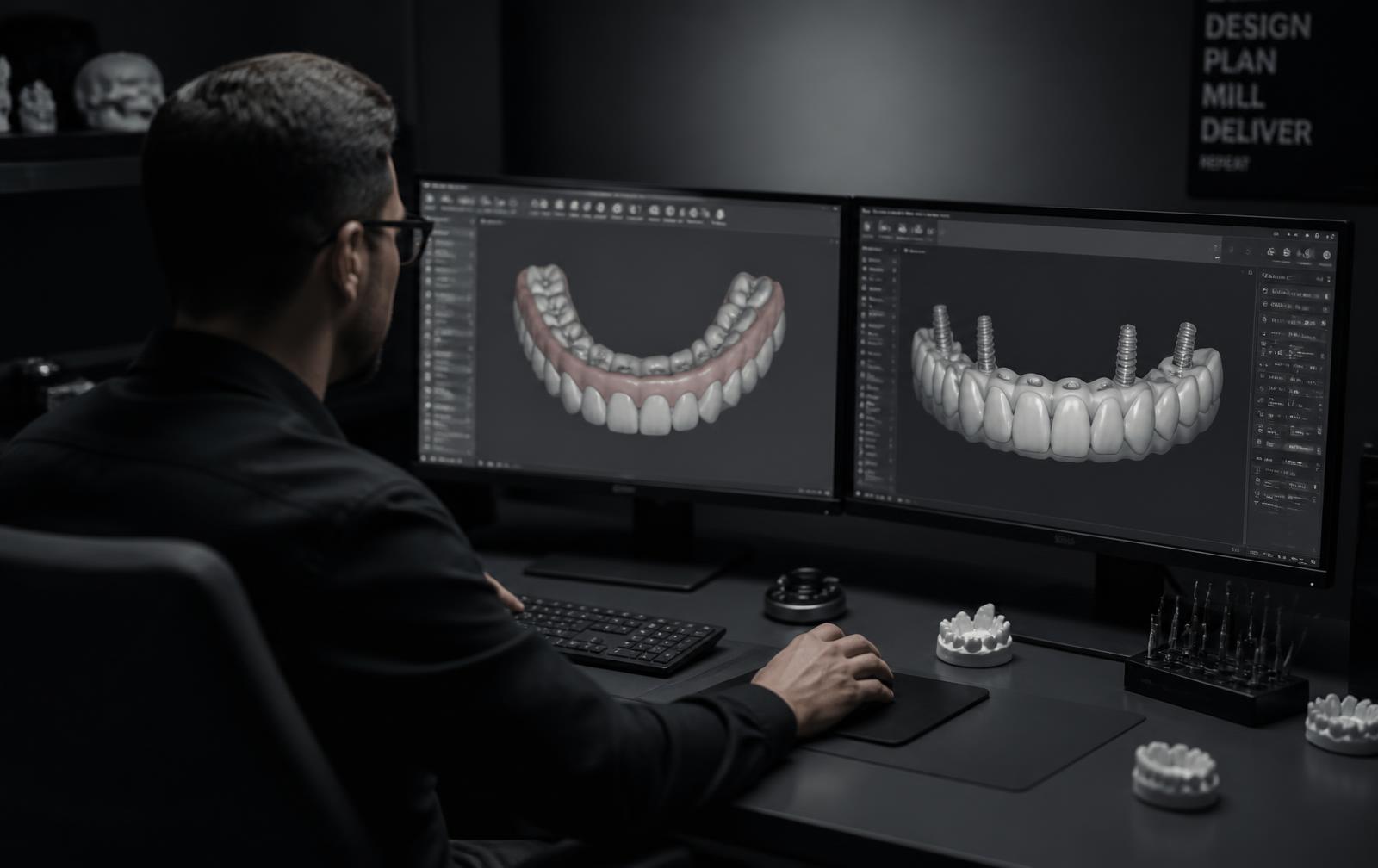
Cases that used to require three appointments and ten lab days now routinely close in one visit and about three turnaround days. That is not a marginal efficiency gain. It changes how a practice can schedule, quote, and present treatment.
Traditional Workflow vs. Digital Same-Week Workflow
| Workflow Step | Traditional Analog Process | Digital Same-Week Process |
|---|---|---|
| Patient appointments needed | 3 or more | As few as 1 |
| Impression / scan method | Physical impressions, stone models | Intraoral / photogrammetry digital scan |
| Lab turnaround | 10+ business days | Around 3 business days |
| Doctor-designer communication | Routed through a case portal or courier | Direct, real-time with the designer |
| Typical revision rounds | 2 to 3, each adding shipping delays | Usually 1, resolved same day |
The Clinical Data Behind the Confidence
Faster does not automatically mean riskier, and the published literature on digital, immediate-loading full-arch protocols backs that up. A separate clinical study on digitally prefabricated provisionals delivered without a cast reported 98.18% survival at one year across 55 implants, describing the approach as a durable, complication-light alternative to conventional casting.
A broader case series applying digital workflows to All-on-4 and All-on-6 protocols reported 98.3% overall implant survival at 12 months, with only minor prosthetic complications in a minority of cases.
Even in mixed maxilla and mandible cohorts, where outcomes tend to run lower for the upper arch, 24-month survival has still been reported around 92%. Taken together, the data supports what many clinicians have already found in practice: removing the physical bottlenecks from a full-arch workflow speeds up delivery without trading away predictability.
Published Survival Data on Digital Full-Arch Protocols
| Study / Protocol | Implants Placed | Survival Rate | Follow-Up |
|---|---|---|---|
| Digital photogrammetry, immediate full-arch load | 65 | 98.48% | 24 months |
| Digitally prefabricated provisionals, computer-guided placement | 55 | 98.18% | 12 months |
| All-on-4 / All-on-6 digital workflow case series | Multi-patient cohort | 98.30% | 12 months |
| Immediate-load full-arch, mixed maxilla/mandible | Multi-patient cohort | 92.31% | 24 months |
Note: figures above are drawn from peer-reviewed clinical studies of digital, immediate-loading full-arch protocols and are provided for general context. Individual case outcomes vary with bone quality, case complexity, and patient factors.
What Faster Turnaround Unlocks for the Practice
The most visible benefit of same-week turnaround is patient experience, but it is not the only one. Faster delivery translates into more case starts per month, because chairs are not held open waiting on a lab that runs on a two-week cycle. It also lowers no-show rates on second appointments; the shorter the gap between the first visit and the delivered result, the less time a patient has to lose momentum or second-guess the decision.
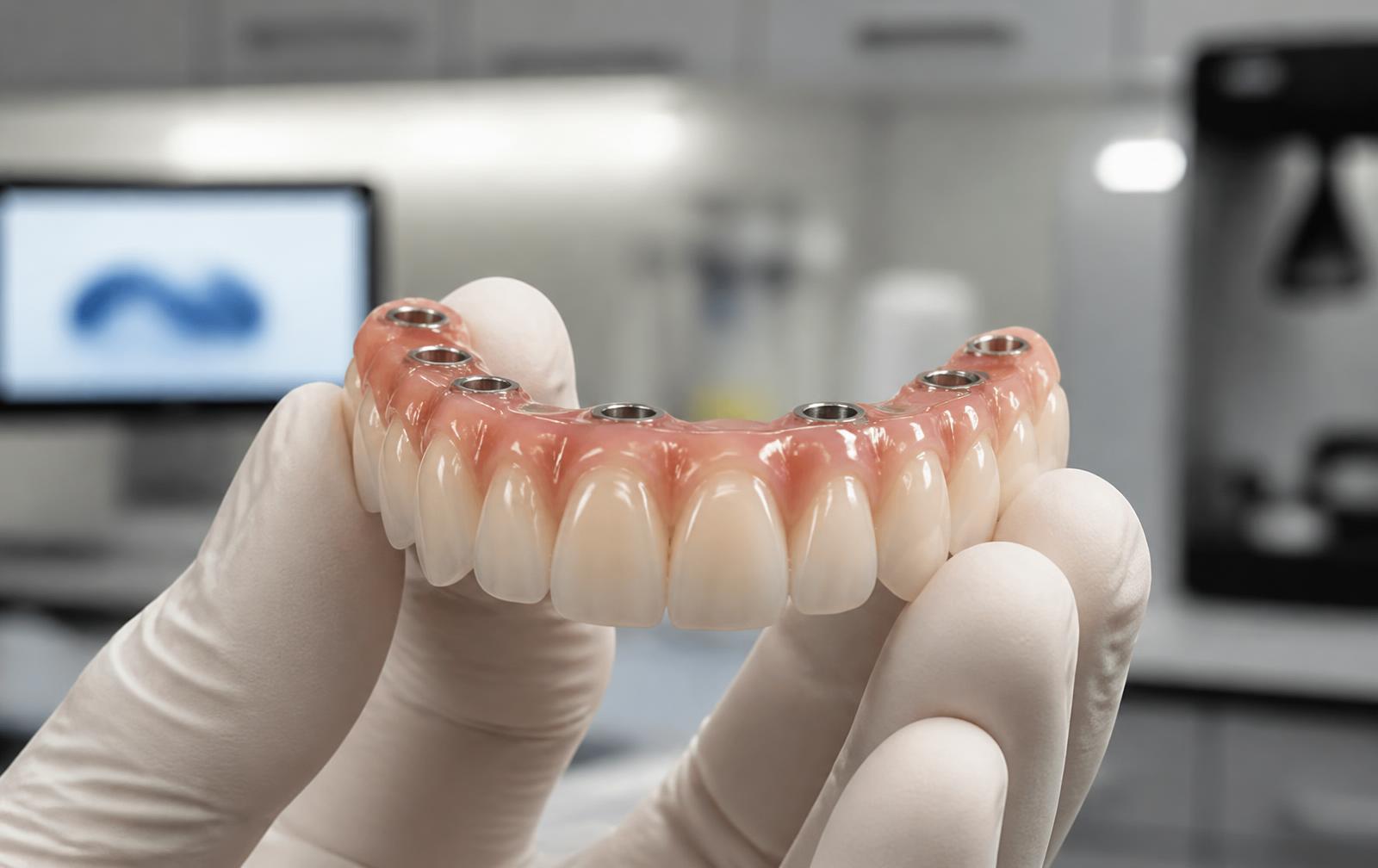
Case acceptance climbs for a similar reason. When a patient can see a realistic timeline measured in days, treatment feels concrete rather than theoretical. And for the doctor, reliable delivery timelines restore something that is easy to lose in a slow workflow: schedule flexibility. When a lab consistently hits its turnaround window, scheduling stops being a guessing game built around worst-case delays.
Where the Designer Fits Into the Timeline
Compressing a full-arch case from weeks to days is less about a single piece of software and more about who is on the other end of the file. A dedicated designer who answers directly, understands full-arch anatomy and occlusion, and can turn a revision around the same day is what keeps a three-day workflow from slipping back into a ten-day one. That is the operational difference between a lab that promises fast turnaround and one that delivers it consistently, case after case.
Software alone does not shorten a timeline. A practice can own the fastest intraoral scanner on the market and still wait two weeks if the scan lands in a general intake queue, gets assigned to whoever is next in rotation, and requires three email exchanges before a simple midline correction is approved. The bottleneck moves from equipment to process the moment hardware stops being the limiting factor, which is exactly where most practices sit today.
What to Look for in a Full-Arch Design Partner
Not every lab that advertises a digital workflow actually delivers same-week turnaround, so it helps to know what separates the two. A few questions are worth asking before committing a full-arch case to a new partner:
- Does a named designer own the case, or does it move through a general queue each time a revision is needed?
- Can a doctor reach that designer directly by phone or message, or only through a ticketing system?
- What is the stated turnaround window from scan to delivery, and is it published or just promised verbally?
- How are revisions handled: same-day correction, or another multi-day cycle back through the queue?
A lab that can answer all four of these clearly is usually one built around the digital-first, designer-direct model described above, rather than one that simply digitized an otherwise slow analog process.
At JCR AOX Designs, full-arch cases are handled by a dedicated designer from scan to delivery, with direct communication built into the process rather than routed through a support queue. That structure is what allows same-week turnaround to hold up case after case, not just on the cases that go perfectly.
Frequently Asked Questions
Ethan Navarro
Hello, I'm Ethan Navarro, a California-based digital dental design specialist with extensive experience supporting clinicians through advanced CAD/CAM workflows, full-arch restorations, implant planning, and restorative design. I'm passionate about helping dental professionals simplify complex cases by combining precision, collaboration, and innovative digital solutions. Through my articles, I share practical insights on digital dentistry, laboratory workflows, restorative techniques, and emerging technologies that help practices improve efficiency, strengthen communication, and deliver predictable patient outcomes.
Work with our team