
The Hidden ROI of Outsourcing Dental Design (Without Losing Control)
Outsourcing dental design isn't about losing control, it's about gaining time, consistency, and predictability. See how the workflow ROI really adds up.
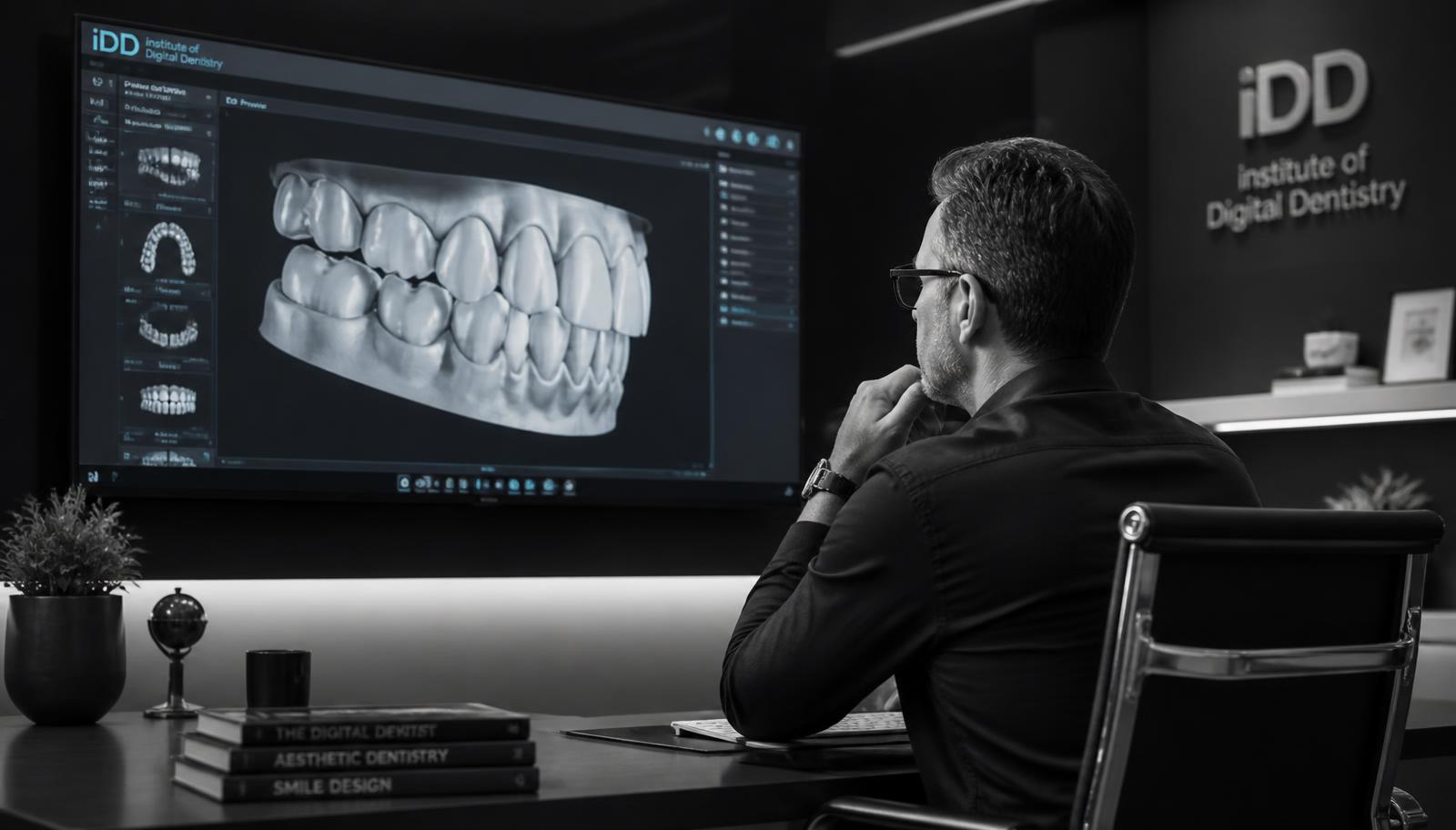
Key Takeaways
- In-house design carries hidden operational drag, training time, workflow gaps during absences, and inconsistent turnaround, that rarely gets tracked.
- A dedicated outsourced partner typically delivers faster, more predictable turnaround because capacity isn’t tied to one person’s schedule.
- Control does not disappear when you outsource. It shifts from managing day-to-day production to directing clinical outcomes.
- Consistency, not headcount, is usually the biggest hidden driver of a smooth, scalable design workflow.
- The right partner functions like an extension of your team, not a faceless portal you upload files into.
For the most reliable outcomes, practices are better off working directly with trusted digital dental design services in california, contact to see the workflow difference for yourself.
The Fully Loaded Reality of In-House Design
A designer’s job description is only the headline. Underneath it sits a stack of operational realities most practices never map out in one place: ongoing training on evolving software, hardware that needs regular attention, and the inevitable gap when a designer is out sick, on vacation, or transitions to a new role while a replacement is trained. None of that shows up in a simple job posting, which is exactly why it gets missed. This mirrors a broader shift already underway across the industry, where market research on the dental laboratory sector points to digital CAD/CAM adoption as the main force pushing labs and practices toward faster, more scalable production models.
When practices actually walk through this exercise, the day-to-day reliability of an in-house seat is almost always shakier than they expected, often shaky enough to make an outsourced partner look like the steadier option, not the riskier one.
It also tends to be an invisible reality until it isn’t. Everything can run fine for months, then a single week, a flu, a family emergency, a laptop that finally dies, exposes exactly how thin the coverage was the whole time. A practice built entirely around one person’s availability is one bad week away from a scheduling headache, regardless of how skilled that person is.
| Operational Factor | In-House Design | Outsourced Design |
|---|---|---|
| Capacity during busy periods | Fixed to one designer’s bandwidth | Flexes with case volume |
| Coverage during PTO/turnover | Case backlog, delays | Continuous, no gap |
| Software & workflow upkeep | Managed internally, ongoing effort | Handled by the partner |
| Onboarding a new hire | Weeks of ramp-up time | Not applicable |
| Consistency of output | Varies with staffing changes | Standardized process |
| Scalability for growth | Limited by one designer’s capacity | Scales with the practice |
Where the Friction Actually Comes From
The gap shows up in three places every single time: idle stretches followed by crunch periods, revision loops caused by miscommunication rather than clinical complexity, and the opportunity cost of a doctor who ends up troubleshooting a workflow instead of treating patients. None of these are dramatic on their own. Stacked over a year, they quietly erase whatever efficiency in-house design was supposed to deliver.
Revision loops deserve special attention because they are the most avoidable friction on this list. A design that misses the mark isn’t usually a skill problem, it’s a communication problem. Notes get lost in an email thread, a preference gets explained once and forgotten, or feedback arrives too vague to act on precisely. The practices with the smoothest workflows, in-house or outsourced, are almost always the ones that solved communication first and treated everything else as secondary.
Control Isn’t Lost, It’s Redirected
This is where most of the hesitation actually lives, and it is worth naming directly: doctors worry that outsourcing means handing over the steering wheel. In practice, the opposite tends to happen. Instead of managing software updates, hardware hiccups, and a single designer’s workload, doctors start directing outcomes, case by case, file by file.
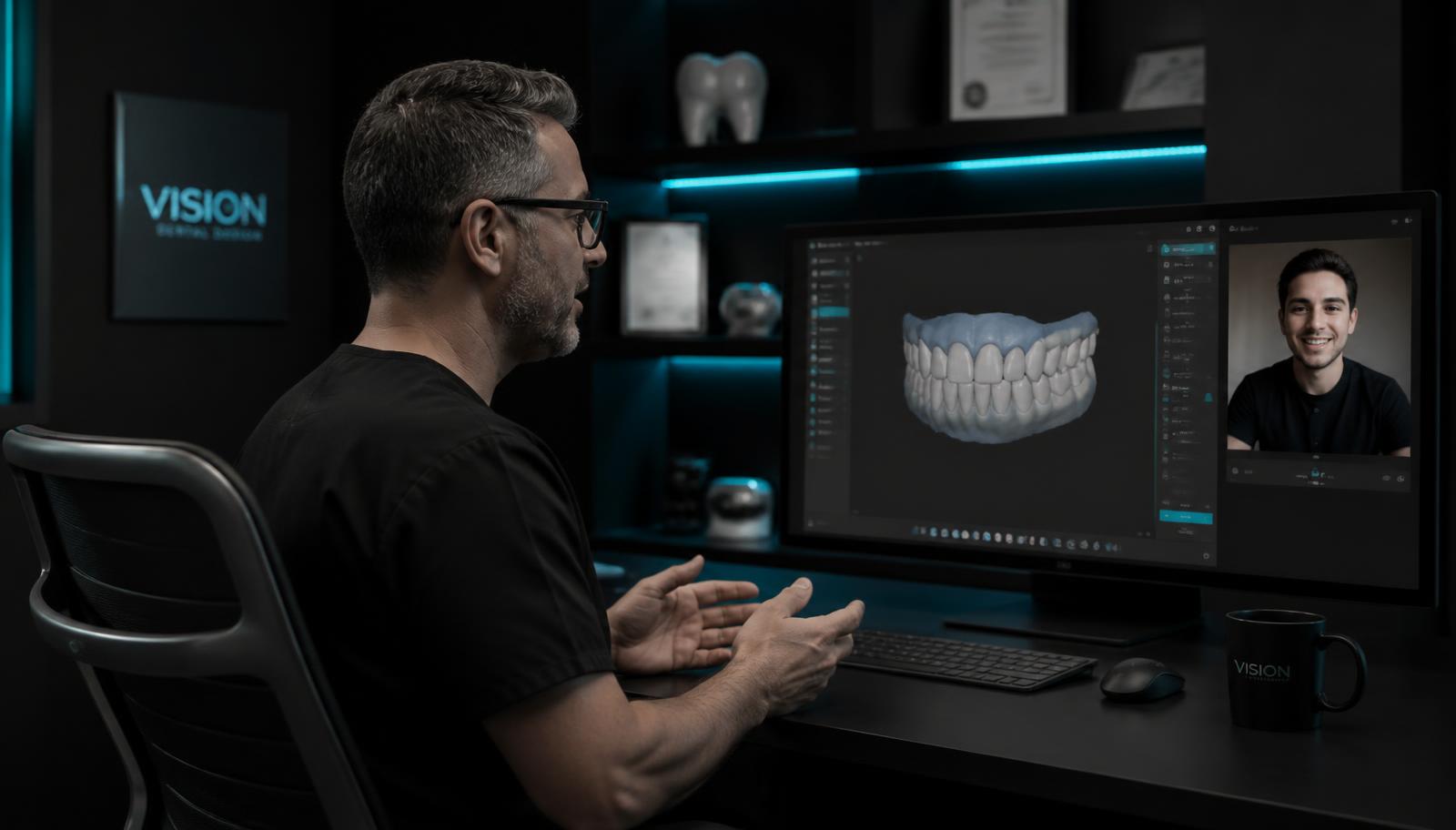
There is a real difference between “make this incisal edge two millimeters longer” and “why is the file late again?” The first is a doctor practicing dentistry. The second is a doctor doing operations management they never signed up for. A design partner that actually communicates, not a portal that swallows files and returns them days later, puts doctors back in the first category.
What Actually Changes on a Day-to-Day Basis
Doctors who make the switch usually describe the same shift: mornings stop starting with a status check. Instead of opening the day wondering whether yesterday’s case is finished, whether the designer is in today, or whether a revision request actually landed, the case simply shows up, designed, on schedule, ready for review. That predictability doesn’t sound dramatic in the abstract, but it removes a category of low-grade stress that most practices had simply learned to live with.
There is also a scheduling ripple effect that is easy to underestimate. When turnaround is consistent, treatment planning gets easier to commit to. Patients can be given real dates instead of “we’ll call you when it’s ready.” Front-desk staff stop absorbing the tension of an uncertain design timeline. None of this shows up on a resume or a job description, but it is exactly the kind of operational ROI that never gets counted, until a practice experiences the alternative.
The Workflow Snapshot: In-House vs. Outsourced
Every practice looks a little different, but the pattern below reflects what a mid-volume practice (roughly 15–20 designed cases per month) commonly experiences once the full workflow is mapped out. Industry benchmarking on this exact issue backs it up: Evident's analysis of dental lab operations identifies turnaround time and workflow consistency as two of the KPIs most correlated with long-term profitability and case quality.
| Metric | In-House (typical) | Outsourced Partner |
|---|---|---|
| Average turnaround per case | 3–6 days (variable) | 24–48 hours (consistent) |
| Revision cycles per case (avg.) | 2–3 | 1–2 |
| Downtime risk (PTO, turnover) | High | Minimal |
| Direct designer communication | Yes, limited to one person | Yes, without staffing risk |
| Ability to absorb case surges | Limited | Built in |
What This Looks Like in Practice
Consider a practice relying on one in-house designer handling roughly 200 cases a year. Turnaround runs smoothly most weeks, until a two-week absence, a hardware issue, or a run of complex cases hits at the same time. Suddenly the backlog stretches, revisions pile up, and the doctor is fielding scheduling questions instead of reviewing designs. A dedicated outsourced partner, built to absorb exactly that kind of surge, keeps turnaround steady regardless of what is happening on any single day, while also freeing up hours the doctor would otherwise spend managing the design seat instead of patients.
The same pattern plays out with growth. A practice that adds a second chair, takes on more full-arch cases, or simply gets busier during a strong quarter will hit the ceiling of a single in-house designer’s capacity sooner or later. Scaling an outsourced relationship is usually a conversation. Scaling in-house capacity is a hiring process, with all the lead time, training, and uncertainty that comes with it.
The Bottom Line
The ROI of outsourcing design was never really hidden, it was just never measured correctly. Once the full workflow is on the table, the comparison stops being close.
JCR AOX Designs was built around this exact idea: a family-owned, designer-led lab where doctors talk directly to the person designing their case, instead of a support queue. If you want to see what a steadier workflow looks like for your own practice, reach out to our team for a first consultation, it is on us.
Frequently Asked Questions
Ethan Navarro
Hello, I'm Ethan Navarro, a California-based digital dental design specialist with extensive experience supporting clinicians through advanced CAD/CAM workflows, full-arch restorations, implant planning, and restorative design. I'm passionate about helping dental professionals simplify complex cases by combining precision, collaboration, and innovative digital solutions. Through my articles, I share practical insights on digital dentistry, laboratory workflows, restorative techniques, and emerging technologies that help practices improve efficiency, strengthen communication, and deliver predictable patient outcomes.
Work with our team