How to Choose a Reliable Dental Laboratory for Long-Term Success
Learn how to evaluate dental lab services in California for communication, digital workflows, quality control, turnaround, materials, and long-term reliability.
Key Takeaways
- Evaluate a laboratory based on case expertise, communication, digital compatibility, quality control, and turnaround expectations.
- Test a potential partner with representative cases before changing your entire laboratory workflow.
- Digital capabilities are most useful when supported by clear communication and defined review processes.
- Choose a laboratory model that matches your practice's actual case mix and long-term workflow needs.
Choosing dental lab services in California is about more than comparing prices or finding the closest facility. The laboratory you select becomes part of your restorative workflow, so its communication, technical capabilities, turnaround times, and quality-control processes can directly affect case management. If you are asking, "How can I find a reliable dental laboratory?", the answer starts with evaluating how well a lab fits your actual case mix and clinical workflow.
How to Choose a Reliable Dental Laboratory for Long-Term Success
A reliable dental laboratory should provide consistent communication, appropriate technical capabilities, clear turnaround expectations, and a defined process for reviewing or correcting cases.
Before committing to a long-term partnership, evaluate these areas:
- Case expertise: Confirm that the lab regularly handles the restorations and workflows your practice uses.
- Communication: Determine whether you can speak with a technician or designer when a case requires discussion.
- Digital compatibility: Ask how the lab receives scans, handles CAD files, and manages digital case information.
- Quality control: Understand how cases are checked before they are returned to the practice.
- Turnaround: Get specific timelines rather than relying on general promises such as "fast service."
- Remake and redesign procedures: Ask what happens when a restoration requires modification or does not meet the intended specifications.
The American Dental Association emphasizes the importance of clear written instructions between dentists and laboratories, including details about the work, materials, and design requirements. It also outlines responsibilities for laboratories concerning case instructions, materials, communication, and timely production.
What Should You Look for in Dental Lab Services in California?
Start by looking beyond the laboratory's marketing claims. A strong evaluation should focus on how the lab actually works with your team.
For digital practices, ask whether the laboratory can consistently support your preferred scanning and design workflow. FDA guidance recognizes CAD/CAM systems for dental restorations as part of the regulated dental-device landscape, making technical processes and appropriate material use important considerations when evaluating digital workflows.
Also consider whether the laboratory offers:
- Digital case intake and CAD design
- Direct communication with the designer or technician
- Full-arch and implant workflow experience when relevant
- Restoration redesign or adjustment support
- Material information and documentation
- Clear case-submission requirements
- Defined quality-control procedures
- Predictable shipping and delivery processes
A useful rule of thumb is to test a potential laboratory with a representative case before moving a large portion of your workflow. One successful case does not establish a long-term pattern, but a small trial can reveal how the laboratory communicates, handles questions, manages deadlines, and responds to requested changes.
How Do Digital Workflows Affect Laboratory Reliability?
Digital dentistry can make communication and case management more efficient, but the technology itself is not enough. The important question is how effectively the laboratory integrates technology with human review.
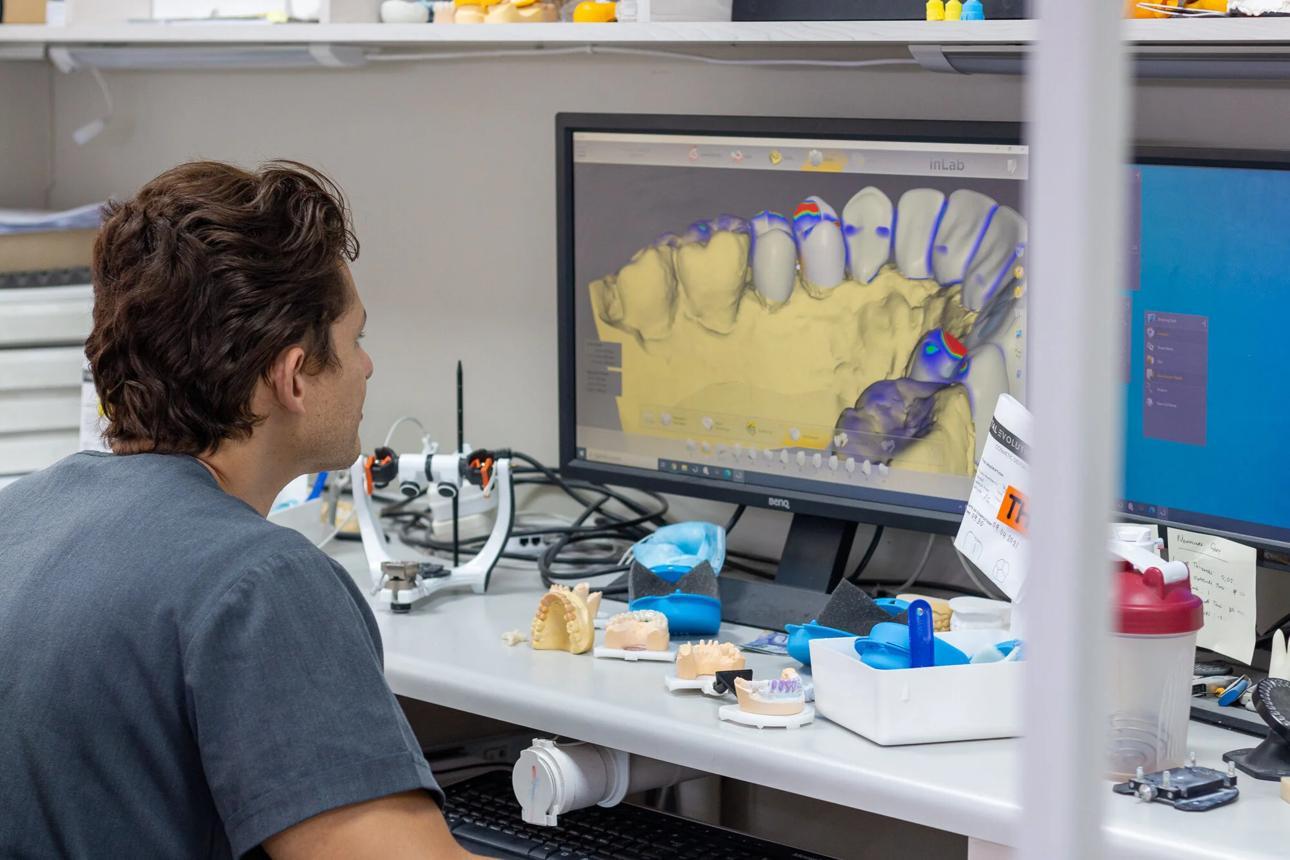
For example, digital dental design services in California may support workflows involving intraoral scans, CAD design, case visualization, and digital communication. However, practices should still establish who reviews the design, how changes are communicated, and when the dentist approves the case.
This is particularly important for complex restorative work. A technically capable lab that cannot communicate effectively can still create workflow friction.
For practices that need broader support, dental design services in California can also include consultation, redesign, digital workflow guidance, and coordination between the design and fabrication stages.
Full-Service or Specialty Laboratory: Which Fits Your Practice?
There is no universal laboratory model for every dental practice. The right choice depends on case volume, complexity, preferred materials, turnaround requirements, and how much direct collaboration your team wants.
| Factor | Full-Service Laboratory | Specialty Laboratory |
|---|---|---|
| Service scope | Multiple stages managed together | Focused on selected services |
| Communication | May provide direct case collaboration | Often structured around a specific workflow |
| Complex cases | Useful when several stages must stay coordinated | Strong fit when specialized expertise is the priority |
| Digital workflow | Can combine design and production | Depends on the laboratory's capabilities |
| Best consideration | Overall workflow continuity | Specific technical requirement |
The goal is not to choose a particular laboratory model automatically. Instead, compare each option against the type of cases your practice actually sends.
What Questions Should You Ask Before Choosing a Lab?
A short conversation before opening an account can reveal more than a polished website.
Ask:
- Who reviews my case when I have a technical question?
- What information do you need with a digital submission?
- Which materials and manufacturing processes do you support?
- What is the standard turnaround for my most common cases?
- How are rush cases handled?
- What happens when a restoration requires redesign?
- Do you subcontract any portion of the work?
- How are changes to case instructions documented?
- What quality checks occur before delivery?
These questions also help establish expectations between the practice and laboratory. The ADA specifically recommends clear communication and documentation between dentists and laboratories, including disclosure when subcontracting is involved.
How Can You Build a Long-Term Laboratory Partnership?
Once you identify a laboratory that appears compatible, consistency becomes the next priority. Create standardized case-submission instructions for your team, including preferred materials, photographs, shade information, scan requirements, and other recurring details.
Review performance periodically rather than waiting for repeated problems. Track practical indicators such as remake frequency, turnaround reliability, communication responsiveness, and how efficiently questions are resolved.
If you are comparing providers, the related guide TOP DENTAL LABS IN CALIFORNIA: How to Choose the Right Partner for Your Practice offers another practical framework for assessing laboratory capabilities and workflow fit.
Choosing the Right Partner for Your Practice
A reliable dental laboratory should fit your practice rather than forcing your team into an unfamiliar workflow. Evaluate technical capabilities, communication, case expertise, turnaround expectations, quality-control procedures, and redesign policies before making a long-term decision.
For practices seeking coordinated design and laboratory support, JCR AOX Designs provides digital design, consultation, and full-service laboratory capabilities from its California operation.
Ready to find a reliable lab partner?
Contact our team to talk through your cases directly with a designer.
Frequently Asked Questions
Ethan Navarro
Hello, I'm Ethan Navarro, a California-based digital dental design specialist with extensive experience supporting clinicians through advanced CAD/CAM workflows, full-arch restorations, implant planning, and restorative design. I'm passionate about helping dental professionals simplify complex cases by combining precision, collaboration, and innovative digital solutions. Through my articles, I share practical insights on digital dentistry, laboratory workflows, restorative techniques, and emerging technologies that help practices improve efficiency, strengthen communication, and deliver predictable patient outcomes.
Work with our team