How to Select a Reliable Dental Prosthetic Laboratory
Choose a dental prosthetic lab in California by evaluating expertise, quality control, digital workflows, communication, services, and reliable turnaround times.
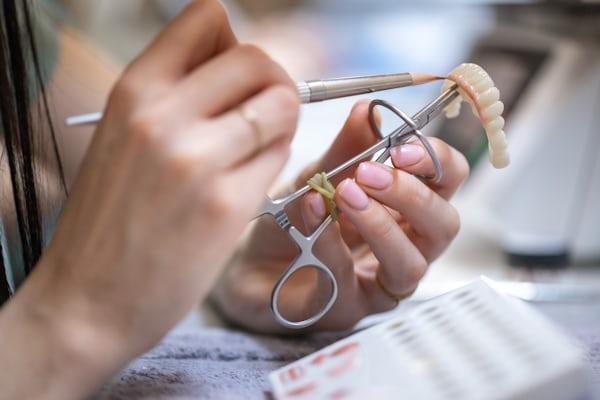
Choosing the right dental laboratory can directly affect turnaround times, restoration fit, communication, and the overall efficiency of a dental practice. But with many laboratories offering similar services, how do you determine which one is dependable?
When evaluating a dental prosthetic lab in California, dentists should look beyond pricing alone. The right laboratory should demonstrate technical capability, consistent communication, appropriate materials and processes, dependable turnaround, and an understanding of the clinical requirements behind each case.
How do I choose a reliable dental prosthetic lab?
Choose a dental laboratory by evaluating its technical expertise, restoration capabilities, communication practices, quality-control processes, turnaround expectations, digital workflow, and ability to handle the specific cases your practice routinely sends.
A reliable lab should also be willing to explain how it manages cases rather than simply promising fast service or low prices.
1. Evaluate the laboratory's range of services
Start by determining whether the laboratory can support the types of prosthetic cases your practice handles.
A lab offering crowns and bridges may be appropriate for one practice, while another may need implant restorations, removable prosthetics, digital design, or more specialized solutions.
For practices looking for broader capabilities, a full service dental lab in California may simplify case coordination by providing multiple laboratory services through one provider.
Consider whether the lab can support:
- Fixed dental restorations
- Removable prosthetics
- Implant-supported restorations
- Digital CAD/CAM workflows
- Custom appliances or prosthetic solutions
- Repairs and adjustments
- Complex or specialized cases
The objective is not necessarily to find the lab offering the longest service list. It is to find one whose capabilities align with your clinical needs.
2. Look at technical expertise and quality control
A laboratory's equipment matters, but technology alone does not guarantee consistent results. Ask about the people operating the equipment, their experience, and how cases are checked throughout production.
Quality control should be part of the workflow rather than something performed only at the final stage.
The American Dental Association notes that dental standards address areas including safety, reliability, efficacy, prosthodontic materials, implants, and CAD/CAM dentistry.
That makes it reasonable for dental practices to ask prospective laboratories how they approach material selection, digital design, fabrication, finishing, and case verification.
3. Compare digital capabilities
Digital dentistry has changed how dental practices and laboratories communicate. Intraoral scans, digital impressions, CAD/CAM design, and digital case files can streamline information exchange when the laboratory has compatible systems and established processes.
When assessing a custom dental laboratory in California, ask:
- Which digital file formats are accepted?
- Does the lab work with your scanner or preferred workflow?
- How are digital cases reviewed?
- How are design changes communicated?
- What happens if a digital file is incomplete or unclear?
A good digital workflow should reduce unnecessary back-and-forth, not create another source of confusion.
4. Assess communication before sending important cases
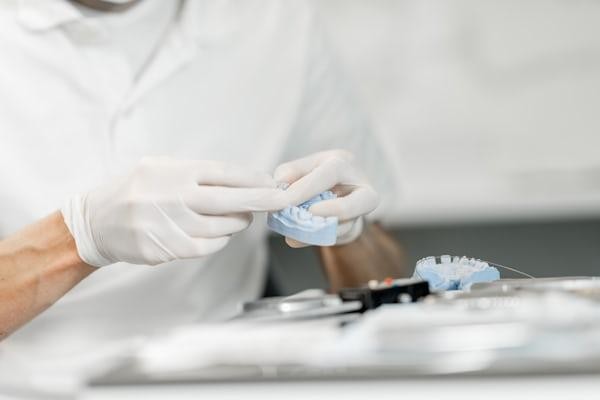
Communication is one of the easiest factors to overlook during the selection process. A laboratory may produce technically capable restorations, but if your team struggles to reach the right person when a case needs clarification, delays can follow. Ask how the laboratory handles:
- Case questions
- Shade information
- Design changes
- Rush requests
- Remakes
- Delivery updates
- Technical consultations
A dependable lab should have a clear process for communicating when a case requires additional information.
5. Compare turnaround time with consistency
Fast turnaround can be attractive, but speed should not be the only deciding factor. A laboratory that routinely promises unrealistic deadlines may create more problems for a practice than a lab that provides predictable, clearly communicated timelines.
| Factor | What to look for |
|---|---|
| Turnaround | Clearly defined and realistic timelines |
| Communication | Accessible case support |
| Technology | Digital systems appropriate for your workflow |
| Services | Capabilities matching your clinical needs |
| Quality control | Consistent review procedures |
| Remakes | Clear process for addressing problems |
| Support | Willingness to discuss complex cases |
The best laboratory relationship is usually built around predictability rather than promises of speed alone.
6. Review the lab's approach to case-specific requirements
Every case has its own clinical considerations. A reliable laboratory should pay attention to the prescription, records, material selection, shade requirements, occlusal considerations, and other information supplied by the dental practice.
For complex cases, communication between the dentist and laboratory technician can be particularly important.
Before selecting a provider, ask how technicians handle cases that require clarification. A lab that identifies missing or conflicting information before fabrication can help prevent avoidable complications later.
7. Consider location and service support
Working with a laboratory in California may provide practical advantages for practices that value regional communication and service coordination. However, location should be considered alongside technical capability and reliability.
If you're researching options, our guide to top dental labs in California provides another useful perspective when comparing laboratory providers and their capabilities.
8. Ask these questions before making a decision
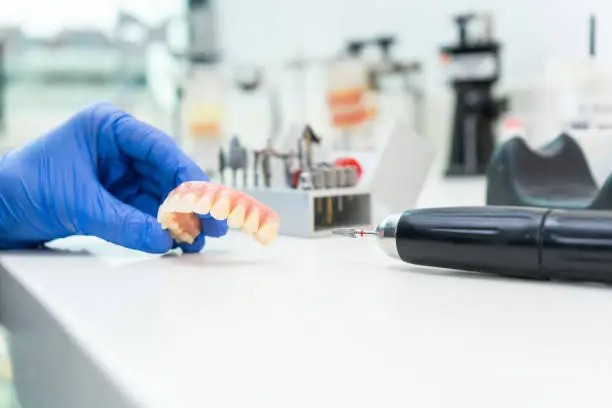
Before committing to a laboratory, ask a few practical questions:
- What types of restorations do you handle most frequently?
- What digital workflows and file formats do you support?
- How do you communicate case questions or missing information?
- What are your standard turnaround times?
- How are remakes or adjustments handled?
- Can technicians consult with dentists about complex cases?
- What quality-control steps are used before cases are returned?
The answers can reveal more about a laboratory's reliability than a marketing claim or price sheet.
Build a laboratory relationship around consistency
Selecting a dental prosthetic lab in California should be viewed as a long-term practice decision rather than a one-time purchasing choice.
The strongest laboratory partnerships are built on clear communication, compatible workflows, technical competence, predictable turnaround, and consistent attention to case requirements.
Rather than choosing solely on price or speed, evaluate how well the laboratory fits your practice. A lab that understands your workflow and communicates effectively can become a dependable extension of your clinical team.
Looking for a dependable dental laboratory partner? Explore JCR AOX Designs' full-service laboratory capabilities and evaluate how its services can support your practice's restorative and prosthetic needs.
Key Takeaways
- Evaluate a dental laboratory's technical expertise, services, quality-control processes, and digital capabilities before choosing a provider.
- Reliable communication is essential for handling case questions, design changes, shade requirements, and complex restorations.
- Compare turnaround times based on consistency and realistic expectations rather than speed alone.
- Choose a laboratory whose capabilities and workflow align with your dental practice's clinical requirements.
Frequently Asked Questions
Ethan Navarro
Hello, I'm Ethan Navarro, a California-based digital dental design specialist with extensive experience supporting clinicians through advanced CAD/CAM workflows, full-arch restorations, implant planning, and restorative design. I'm passionate about helping dental professionals simplify complex cases by combining precision, collaboration, and innovative digital solutions. Through my articles, I share practical insights on digital dentistry, laboratory workflows, restorative techniques, and emerging technologies that help practices improve efficiency, strengthen communication, and deliver predictable patient outcomes.
Work with our team