Building a Modern Practice: The Tech Stack Every Doctor Needs
Discover the technology stack every modern practice needs and how a full-service dental lab in California streamlines digital workflows and patient care.
Modern dentistry isn't about owning every piece of technology on the market. It's about building a workflow that improves patient outcomes, reduces chair time, and allows clinicians to focus on treatment rather than logistics. Many practices invest heavily in scanners, imaging systems, and software, only to discover that disconnected workflows create more problems than they solve.
The missing piece is often the partnership behind the technology. A full-service dental lab in California can bridge the gap between digital tools, case planning, and final restorations, ensuring that every stage of treatment works together seamlessly.
In this guide, you'll learn which technologies truly matter in 2026 and how the right lab partner fits into a modern dental ecosystem.
What Technology Does a Modern Dental Practice Actually Need?
The core dental stack includes an intraoral scanner, CBCT imaging, practice management software, and a reliable lab partner. Many practices chase the newest tools without evaluating whether they improve efficiency or patient care. The most successful clinics focus on technologies that streamline communication and support predictable outcomes. A strong digital workflow usually includes:
- Intraoral scanning
- Cone-beam computed tomography (CBCT)
- Practice management software
- Digital case routing
- Design and fabrication support
- Real-time clinical collaboration
Each component plays a specific role, but none of them can operate effectively in isolation.
The Intraoral Scanner Is the Starting Point
An intraoral scanner has become essential for restorative and implant practices. Faster scans, improved patient comfort, and highly accurate digital impressions make it one of the most valuable investments a clinic can make.
However, compatibility matters just as much as image quality. Practices should prioritize scanners that support open-file exports, allowing seamless collaboration with external design teams and laboratories.
According to JCR AOX Designs, keeping design and finishing under one roof reduces communication gaps and helps practices maintain consistency from planning to final delivery.
Why Is CBCT Critical for Implant Cases?
CBCT imaging provides three-dimensional data that improves treatment planning and reduces uncertainty.
For practices handling implants, full-arch restorations, and complex reconstructions, volumetric imaging has become indispensable. CBCT scans allow clinicians and designers to visualize bone structure, anatomical limitations, and prosthetic positioning before treatment begins.
Research also shows that digital technologies such as 3D printing and advanced imaging continue to expand possibilities in restorative dentistry and surgical planning.
The benefits include:
- Improved implant placement accuracy
- Better communication with the laboratory
- Reduced chairside adjustments
- More predictable restorative outcomes
Technology Alone Doesn't Build Great Cases
Many clinics assume that investing in expensive equipment automatically improves efficiency. In reality, the true value comes from integrating each tool into a workflow that minimizes delays and miscommunication.
| Technology | Primary Purpose | Clinical Benefit |
|---|---|---|
| Intraoral scanner | Digital impressions | Faster case submission |
| CBCT | 3D imaging | Better treatment planning |
| PMS software | Case management | Improved coordination |
| Lab partnership | Design and fabrication | Reduced turnaround time |
A modern practice is not defined by how many tools it owns, but by how effectively those tools work together.
Should Practices Keep Milling and Design In-House?
For many clinics, bringing every aspect of production under one roof sounds appealing. In reality, in-house design teams and milling systems require significant investments in equipment, training, software updates, and maintenance. Unless a practice handles a very high volume of cases, outsourcing often delivers better efficiency and lower operational costs. Here's a quick comparison:
| Factor | In-House Production | Outsourced Laboratory |
|---|---|---|
| Initial investment | High | Low |
| Staff training | Extensive | Minimal |
| Equipment maintenance | Ongoing | Handled externally |
| Scalability | Limited | Flexible |
| Turnaround support | Internal team only | Dedicated Specialists |
Clinics can focus on patient care while experienced technicians manage the technical work behind the scenes.
The Value of a Specialized Laboratory Partner
A dental prosthetic lab in California does much more than manufacture restorations. The right partner becomes part of the treatment process, collaborating with clinicians from case planning to final delivery. Strong laboratory partnerships can help practices:
- Improve communication during complex cases
- Reduce remakes and chairside adjustments
- Access specialized design expertise
- Speed up production timelines
- Maintain consistency across treatments
For implant cases and full-arch restorations, close coordination between the clinician and the laboratory can significantly improve predictability.
How Do Modern Labs Support Digital Workflows?
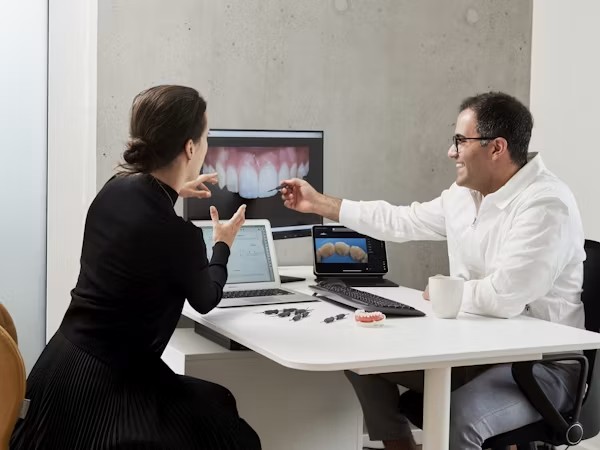
Modern laboratories connect scanners, imaging systems, and treatment planning software into one streamlined workflow. Instead of sending physical impressions and waiting for updates, clinics can now share digital files instantly. A custom dental laboratory in California can review scans, communicate directly with the practice, and provide design modifications before production begins. This digital approach offers several advantages:
- Faster case turnaround times
- More accurate restorations
- Improved collaboration between teams
- Better patient experiences
- Reduced shipping and handling delays
If you're interested in digital workflows, you might also explore topics such as guided implant planning and full-arch restoration design to understand how technology continues to transform dentistry.
Choosing the Right Lab Partner for Long-Term Growth
Technology will continue to evolve, but successful practices understand that equipment alone does not create exceptional outcomes. The most effective clinics invest in partnerships that simplify communication, support clinical decisions, and adapt as patient needs change. JCR AOX Designs provides comprehensive laboratory solutions that combine digital workflows, prosthetic expertise, and collaborative support for practices across California.
Key Takeaways
- Digital dentistry depends on more than hardware; seamless collaboration matters just as much.
- Intraoral scanners, CBCT imaging, and integrated workflows form the foundation of modern practices.
- Outsourcing design and fabrication often provides greater efficiency than bringing everything in-house.
- A trusted lab partner can simplify communication and reduce costly delays.
Frequently Asked Questions
Need a Laboratory Partner That Fits Your Workflow?
Modern dentistry depends on collaboration as much as technology. Choosing the right laboratory partner can help practices streamline operations, improve efficiency, and deliver more predictable outcomes.
Ethan Navarro
Hello, I'm Ethan Navarro, a California-based digital dental design specialist with extensive experience supporting clinicians through advanced CAD/CAM workflows, full-arch restorations, implant planning, and restorative design. I'm passionate about helping dental professionals simplify complex cases by combining precision, collaboration, and innovative digital solutions. Through my articles, I share practical insights on digital dentistry, laboratory workflows, restorative techniques, and emerging technologies that help practices improve efficiency, strengthen communication, and deliver predictable patient outcomes.
Work with our team