7 Signs Your Dental Lab Is Costing You Patients
Learn seven warning signs your dental lab may be hurting efficiency, case quality, and patient experience and what to look for in a better lab partner.
Key Takeaways
- Frequent remakes can consume chair time, increase costs, and create avoidable patient frustration.
- Unpredictable turnaround times can disrupt treatment schedules and force your team to reschedule patients.
- Poor communication between a dental practice and laboratory can cause design details, clinical intent, and expectations to get lost.
- A dependable lab should provide clear communication, quality control, predictable workflows, and a willingness to flag questionable cases.
- Tracking remake frequency, turnaround performance, revisions, and case issues can reveal whether your laboratory relationship is helping or hurting your practice.
7 Signs Your Dental Lab Is Costing You Patients
Your dental laboratory may seem like a behind-the-scenes vendor, but the lab can influence what happens in the operatory, at the front desk, and in the patient experience. JCR AOX Designs works around a simple idea: when laboratory communication, design, fabrication, and quality control work together, dental practices can operate with greater confidence.
A lab problem does not always appear as a large invoice. It can show up as a remake, an extra adjustment appointment, an unhappy patient, or a treatment schedule that keeps moving. Research on fixed prosthodontic remakes has also linked remakes with additional clinical time, laboratory expense, and patient dissatisfaction. PubMed Here are seven signs that your current laboratory relationship deserves a closer look.
1. Remakes Are Becoming a Pattern
An occasional remake can happen in restorative dentistry. A repeated pattern is different. If crowns, veneers, bridges, or other restorations regularly return because of fit, contacts, margins, occlusion, or esthetic concerns, the problem may be bigger than one case. Frequent remakes create a chain reaction: the laboratory has to reproduce the work, your team has to coordinate the replacement, and the patient may need another appointment. In a multicenter audit of 40,344 indirect restorations, researchers recorded 2,612 remakes, or about 6.5%. The study found that margin-fit discrepancies, proximal-fit issues, and improper fit were among the leading reasons.
2. Turnaround Times Are Unpredictable
A promised turnaround is useful only when your team can plan around it. If a laboratory regularly misses expected delivery dates, your scheduling team may have to move insertion appointments, contact patients again, and rearrange clinical time. Even when the restoration eventually arrives, the disruption has already happened. A dependable laboratory should provide realistic timelines, communicate delays early, and provide a process that makes case status easy to understand.
3. You Cannot Easily Reach the Person Handling the Case
Complex restorative cases often require discussion. A generic inbox or long chain of intermediaries can make it harder to clarify design preferences, materials, photos, scans, occlusal considerations, or clinical objectives. Direct communication matters because small details can have a large effect on the final restoration. When your designer or laboratory team can understand the case rather than simply process a file, there is more opportunity to catch issues before fabrication.
4. Revisions Feel Like a Fight
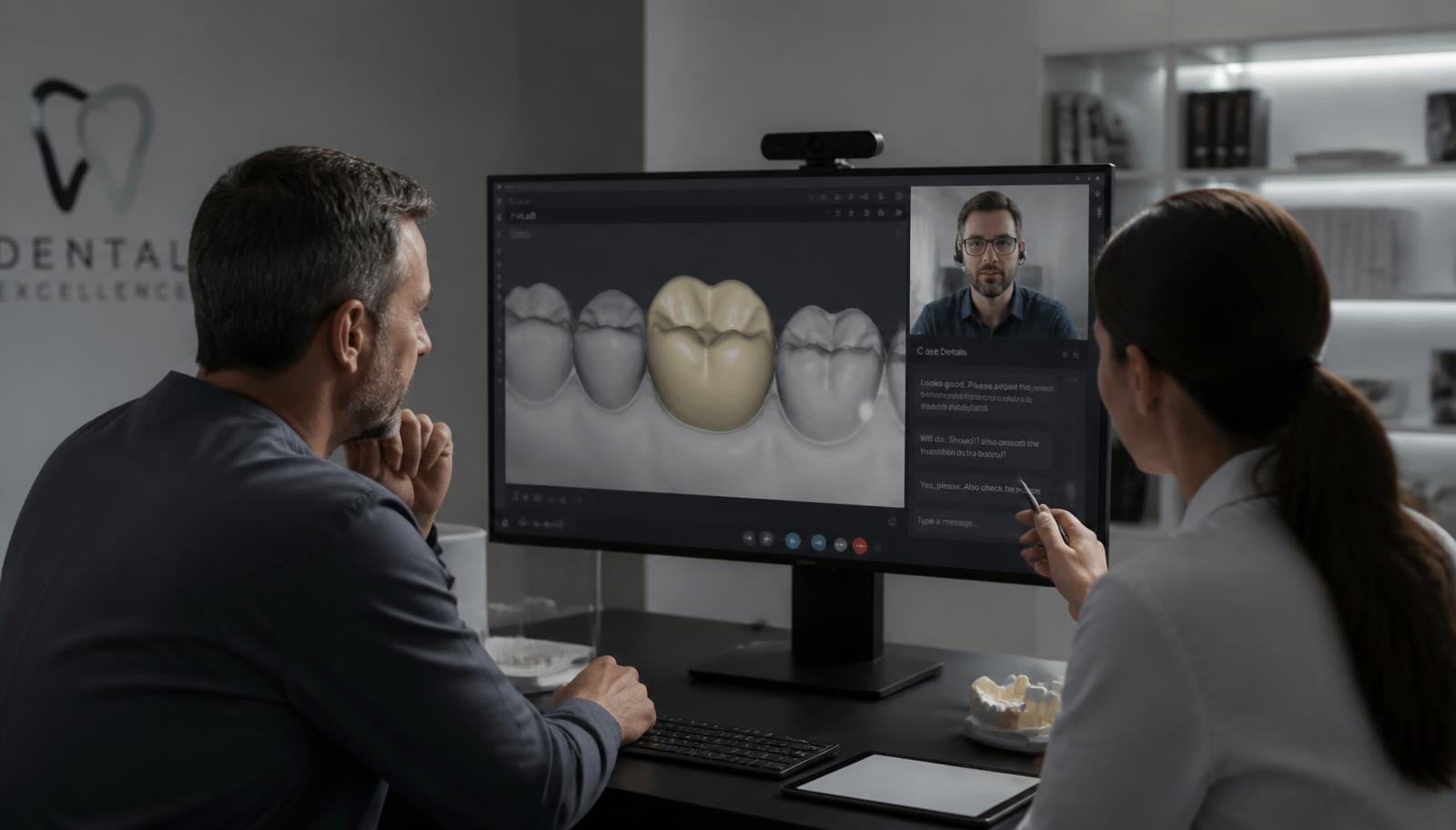
A healthy laboratory relationship should leave room for appropriate case refinement. If your team hesitates to request a necessary design revision because every adjustment creates confusion, delay, or an unexpected charge, the workflow can become counterproductive. The goal should not be unlimited revisions; it should be a clear process for reviewing a case and making clinically appropriate changes before the final restoration is produced.
5. The Lab Does Not Flag Problematic Cases
A strong laboratory partner should be willing to raise a concern when something in a case does not appear workable. That could involve an unclear prescription, insufficient information, questionable design parameters, or a mismatch between the submitted files and the requested restoration. A lab that simply accepts every case without meaningful review may transfer the risk back to the practice. Good communication is not just about saying yes, it is also about identifying problems early enough to solve them.
6. Final Quality Is Inconsistent
Patients may not know which laboratory fabricated their restoration, but they notice the finished result. Inconsistent fit, contour, contacts, occlusion, or esthetics can create additional chairside work and affect how patients perceive the quality of their dental care. Consistency requires more than skilled fabrication. It depends on clear case information, controlled processes, appropriate design, and quality checks before a restoration leaves the laboratory.
7. Your Team Dreads Sending Cases
This is one of the easiest signs to overlook. If your staff expects delays, your clinicians anticipate adjustments, or your team feels that every case requires extra explanation, the laboratory relationship is creating friction. That friction has a cost even when it is not listed on an invoice. Your staff spends time following up, clinicians spend more time managing exceptions, and patients may experience a less predictable treatment journey.
What the Numbers Say About Remakes
| Data Point | Finding | Why It Matters |
|---|---|---|
| 40,344 indirect restorations | 2,612 remakes (~6.5%) | Shows that remakes can represent a meaningful workflow issue at scale. |
| Crown practice-based research | Overall remake rate about 4% | Even a few percent can create additional appointments and laboratory work. |
| Common remake causes | Margin-fit, proximal-fit and improper-fit issues | Highlights the importance of accurate preparation, communication and design. |
| Clinical practice survey | 59% of dentists reported <2% remake rate; 17% reported >4% | Tracking your own rate helps reveal whether performance is outside your normal baseline. |
Sources: National Dental Practice-Based Research Network and Saudi Dental Journal
What to Look for in a Better Dental Lab Partner
If several of these warning signs sound familiar, the answer is not necessarily to change laboratories immediately. Start by measuring the relationship. Track remake frequency, average turnaround, reasons for revisions, unresolved case questions, and the amount of chairside time spent correcting laboratory-related issues. Then compare those results with what your practice needs.
| Area | A Strong Workflow | Warning Sign |
|---|---|---|
| Communication | Direct, clear case discussion | Questions repeatedly pass through multiple people |
| Turnaround | Predictable and communicated early | Delivery dates frequently change |
| Quality control | Cases reviewed before shipment | Problems are discovered only at insertion |
| Case review | Lab flags concerns before fabrication | Every submitted case is accepted without discussion |
| Accountability | Clear ownership from design to final | Multiple vendors create handoff gaps |
Why a Full-Service Approach Can Make a Difference
When design and fabrication are separated across multiple providers, information can be lost during handoffs. A full service dental lab in california can simplify that process by keeping more of the restorative workflow connected. For practices, the value is not simply having more services in one place. It is having a clearer chain of communication and accountability from case submission through final quality control.
JCR AOX Designs describes its integrated workflow as combining digital case design, final ART OF ARCHES restorations, quality control, and coordinated communication under one team. For dentists evaluating a laboratory partner, that type of structure can be worth considering when the current process is creating unnecessary delays or repeated handoffs.
How to Know When It Is Time to Reevaluate Your Lab
One bad case does not define a laboratory. A repeated pattern does. If remakes are increasing, turnaround is unreliable, communication is difficult, or your team spends too much time fixing laboratory-related problems, it is worth reviewing the relationship objectively. Ask your team what happens between case submission and final delivery, where delays occur, and which problems repeat most often.
The right laboratory partner should make restorative workflows feel more predictable, not more complicated. By monitoring measurable performance and choosing a lab that values communication, consistency, quality control, and accountability, your practice can reduce avoidable friction and create a smoother experience for both your clinical team and your patients.
About JCR AOX Designs
JCR AOX Designs is a California-based digital dental design and laboratory partner focused on connected restorative workflows, digital case design, and final dental restorations. Practices can explore the company's services and workflow to determine whether the approach fits their clinical needs.
Frequently Asked Questions
Ethan Navarro
Hello, I'm Ethan Navarro, a California-based digital dental design specialist with extensive experience supporting clinicians through advanced CAD/CAM workflows, full-arch restorations, implant planning, and restorative design. I'm passionate about helping dental professionals simplify complex cases by combining precision, collaboration, and innovative digital solutions. Through my articles, I share practical insights on digital dentistry, laboratory workflows, restorative techniques, and emerging technologies that help practices improve efficiency, strengthen communication, and deliver predictable patient outcomes.
Work with our team