Why Top Doctors Are Partnering With Digital Design Labs
The best practices stopped doing design in-house. Here's what changed, why the partnership model is winning, and what it means for chair time.
Key Takeaways
- The fastest-growing practices aren't building bigger in-house design departments they're partnering with specialized labs and putting that energy back into chair time.
- A partner lab gives on-demand design expertise scaled to caseload, instead of a fixed salary commitment during slow weeks.
- Same-week and same-day turnaround is becoming standard for full-arch and immediate-load cases, and dedicated design partners are built for that pace.
- Every hour spent managing design files or chasing revisions in-house is an hour not spent with patients the practices winning right now have eliminated that overhead.
The Old Model Doesn't Hold Up Anymore
A decade ago, conventional wisdom said to own every part of the workflow buy the scanner, hire the technician, run the in-house mill, control the case start to finish. That made sense when digital tools were rare and outside vendors were a gamble. That math has flipped. Doctors who once viewed digital dental design services in california as an outsourced convenience now treat a specialized design partner as core infrastructure, not a workaround.
The Economics Finally Make Sense
An in-house designer is a six-figure commitment before software, hardware, and training even enter the picture. A partner lab gives a practice the same caliber of expertise on demand, scaled to actual caseload design gets paid for when it's needed, not carried as a salary during a slow month. That flexibility alone reshapes the math for most practices below very high case volumes.
Industry analysis backs this up directly: one recent breakdown of in-house versus outsourced dental CAD design economics found that below roughly 250 design units a month, the fixed cost of a dedicated in-house designer and software rarely amortizes, while a partner model stays elastic through both slow and high-volume stretches.
There's a talent dimension too. Practices building an in-house department are competing for design talent against labs whose entire business is design. The best technicians want to design premium cases every day, all day and that's exactly where a dedicated partner lab tends to concentrate that talent.
Speed Is the New Differentiator
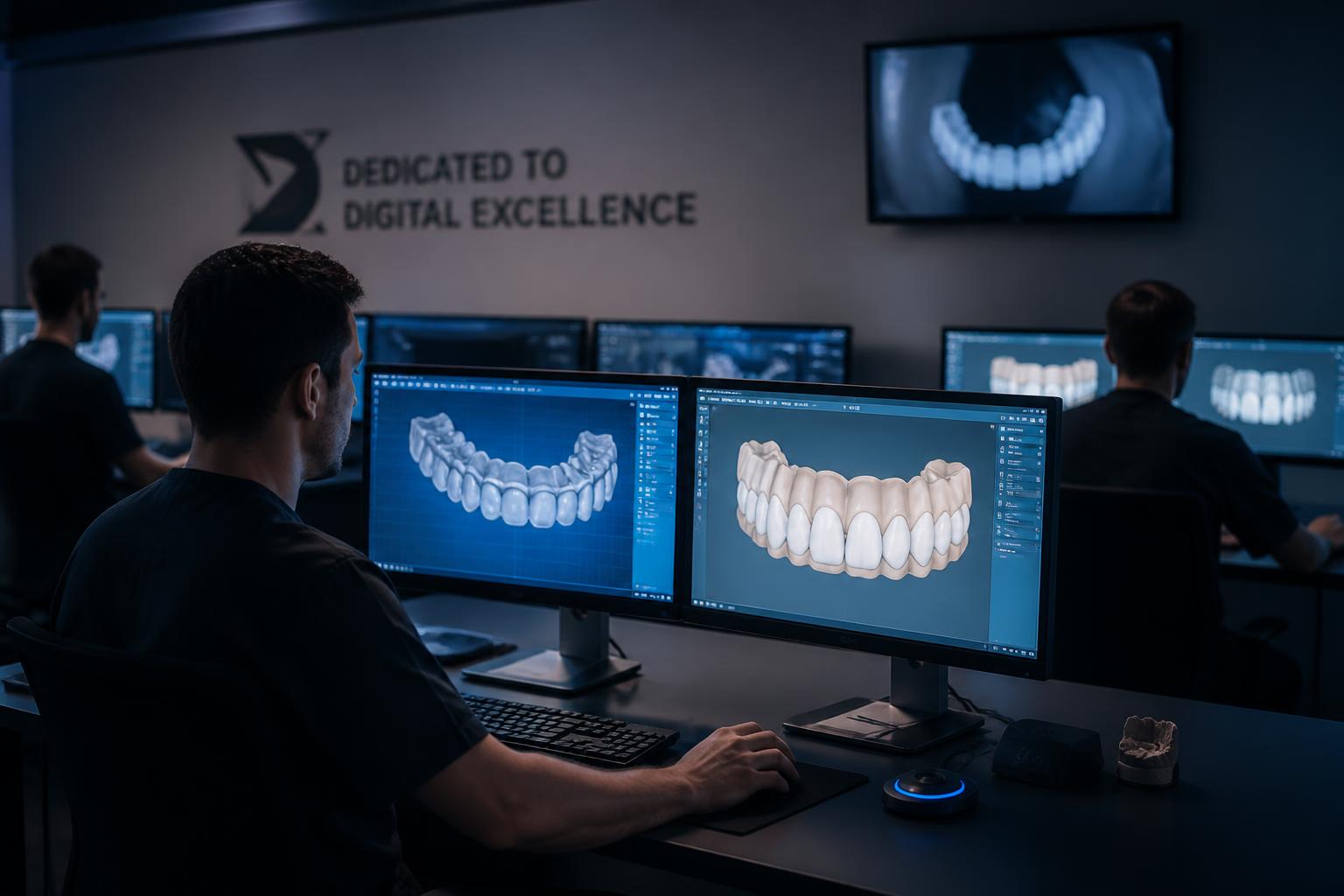
Patients no longer tolerate two-week temporaries as a given. Same-week sometimes same-day turnaround is becoming table stakes for full-arch and immediate-load cases. A dedicated design partner running extended shifts can deliver a pace that an in-house team, however skilled, usually can't sustain solo. Doctors who built a reputation on speed and predictability are finding the partnership model isn't a compromise on quality it's the upgrade that makes that reputation possible at scale.
In-House vs. Partner Lab: What Actually Changes
| Factor | In-House Design Team | Partner Design Lab |
|---|---|---|
| Staffing commitment | Fixed salary, year-round | Scales with case volume |
| Access to specialists | Limited to hires you can make | Broad bench of dedicated designers |
| Turnaround capacity | Limited by team size and hours | Extended shifts, higher throughput |
| Ramp-up time for new hires | Weeks to months of onboarding | Immediate access to trained designers |
| Scalability for case spikes | Difficult without overtime or new hires | Absorbs volume swings natively |
| Focus for the practice | Split between clinical and design ops | Concentrated on chair time and patients |
The pattern across nearly every factor is the same: control moves in-house, flexibility moves to the partner.
Focus Is the Real ROI
Every hour a doctor or office manager spends managing design files, chasing revisions, or troubleshooting software is an hour not spent on patients. The practices winning right now have ruthlessly eliminated those hours from their week. Partner with a designer-direct lab, and the workflow compresses down to four steps: scan, hand off, approve, deliver. The complexity stays on the lab's side of the phone, not the practice's.
This mirrors a broader shift documented across the industry. A 2026 guide to dental lab outsourcing describes the most common model as a direct, ongoing collaboration between a practice and a specialist lab team treated less like a vendor relationship and more like an extension of the practice itself.
Why the Partnership Model Is Spreading
| Factor | What the Data Shows |
|---|---|
| Break-even case volume for in-house design | Roughly 250 units/month before a dedicated seat is justified |
| Time to onboard a new in-house designer | Typically weeks to months of training and ramp-up |
| Time to start with a partner design lab | Immediate access to a trained design team |
| Scalability during case spikes | Partner labs absorb volume swings without new hires |
| Access to specialized skill sets | Broader bench of All-on-X and complex-case specialists |
None of this means in-house design is wrong for every practice high, steady volume above that break-even line can justify a dedicated seat. But for most practices, the partnership model wins on flexibility long before it wins on raw economics.
What the Shift Actually Looks Like Day to Day
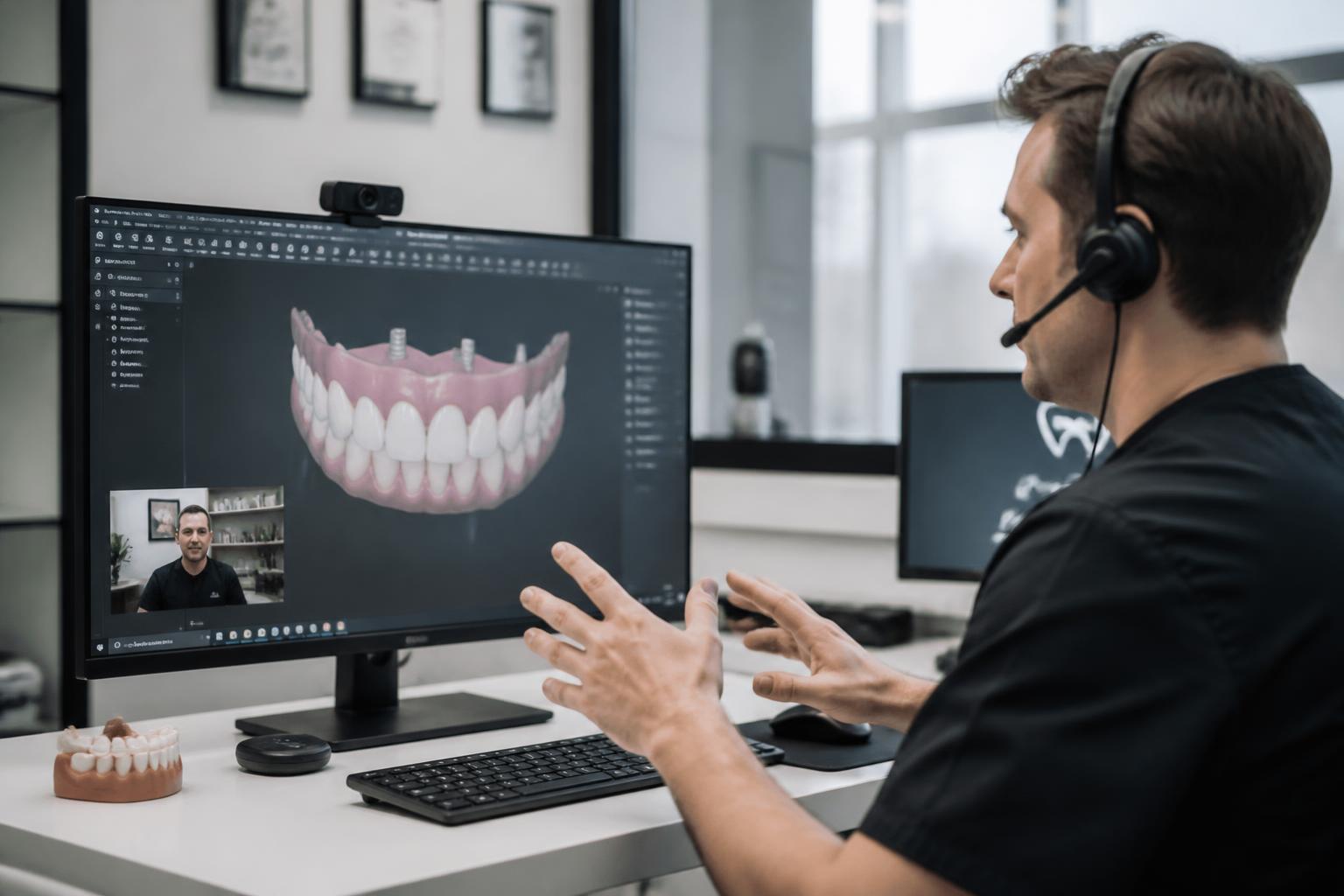
The practices growing fastest right now aren't the ones with the biggest internal design departments they're the ones who found a partner they trust enough to hand the complexity to entirely. JCR AOX Designs works designer-direct with clinicians on full-arch and immediate-load cases, so a practice gets the speed and specialization of a dedicated design team without carrying the fixed overhead of building one in-house.
Frequently Asked Questions
Ethan Navarro
Hello, I'm Ethan Navarro, a California-based digital dental design specialist with extensive experience supporting clinicians through advanced CAD/CAM workflows, full-arch restorations, implant planning, and restorative design. I'm passionate about helping dental professionals simplify complex cases by combining precision, collaboration, and innovative digital solutions. Through my articles, I share practical insights on digital dentistry, laboratory workflows, restorative techniques, and emerging technologies that help practices improve efficiency, strengthen communication, and deliver predictable patient outcomes.
Work with our team