What "Designer-Direct" Actually Means for Your Practice
Designer-direct should describe a real working relationship, not a marketing phrase. Here is what it means in practice, why direct communication matters clinically, and how to test any lab's claim.
Key Takeaways
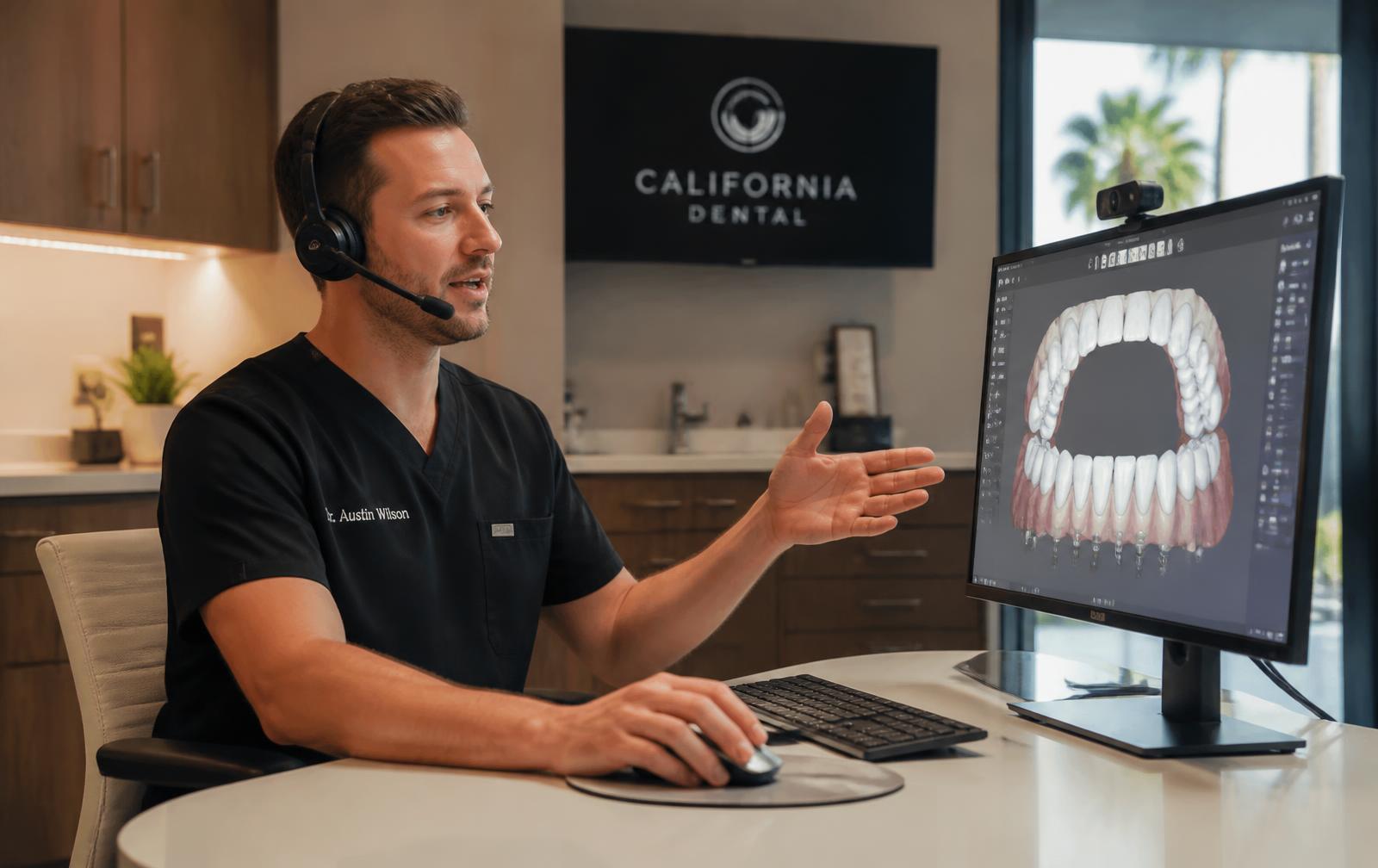
- Designer-direct means dentists can communicate directly with the professional designing the case, rather than relying only on a coordinator or intermediary.
- Direct clinical conversations can reduce misunderstandings around tooth position, occlusion, contours, aesthetics, and other design decisions.
- The American Dental Association emphasizes clear written instructions, accurate records, and effective communication between dentists and laboratories.
- Digital workflows make it easier to exchange scans, images, designs, and feedback between practices and laboratories.
- A useful test for any lab claiming to be designer-direct is simple: ask whether you can speak with the actual designer handling your case.
dental lab consulting in california can provide a structured way to evaluate how technology, communication, and laboratory processes work together.
What Does "Designer-Direct" Really Mean?
The phrase "designer-direct" sounds straightforward, but in dental laboratory work, the real value is in what happens after the phrase is used. A truly designer-direct workflow gives the dentist a practical line of communication to the professional who is actually designing the restoration or prosthetic case.
Instead of sending a message through several layers of case management, the dentist can discuss the case with the designer who understands the digital model, proposed design, and technical considerations. That distinction matters most when a case involves detailed aesthetic, functional, or full-arch decisions.
Why Direct Communication Matters in Dental Design
Dental design is not simply a matter of moving shapes on a screen. Tooth position, occlusal relationships, emergence profiles, soft-tissue contours, smile design, and restorative space can all affect the final result. When communication is indirect, an important detail can be simplified or interpreted differently as it moves from the dentist to a coordinator and then to a designer.
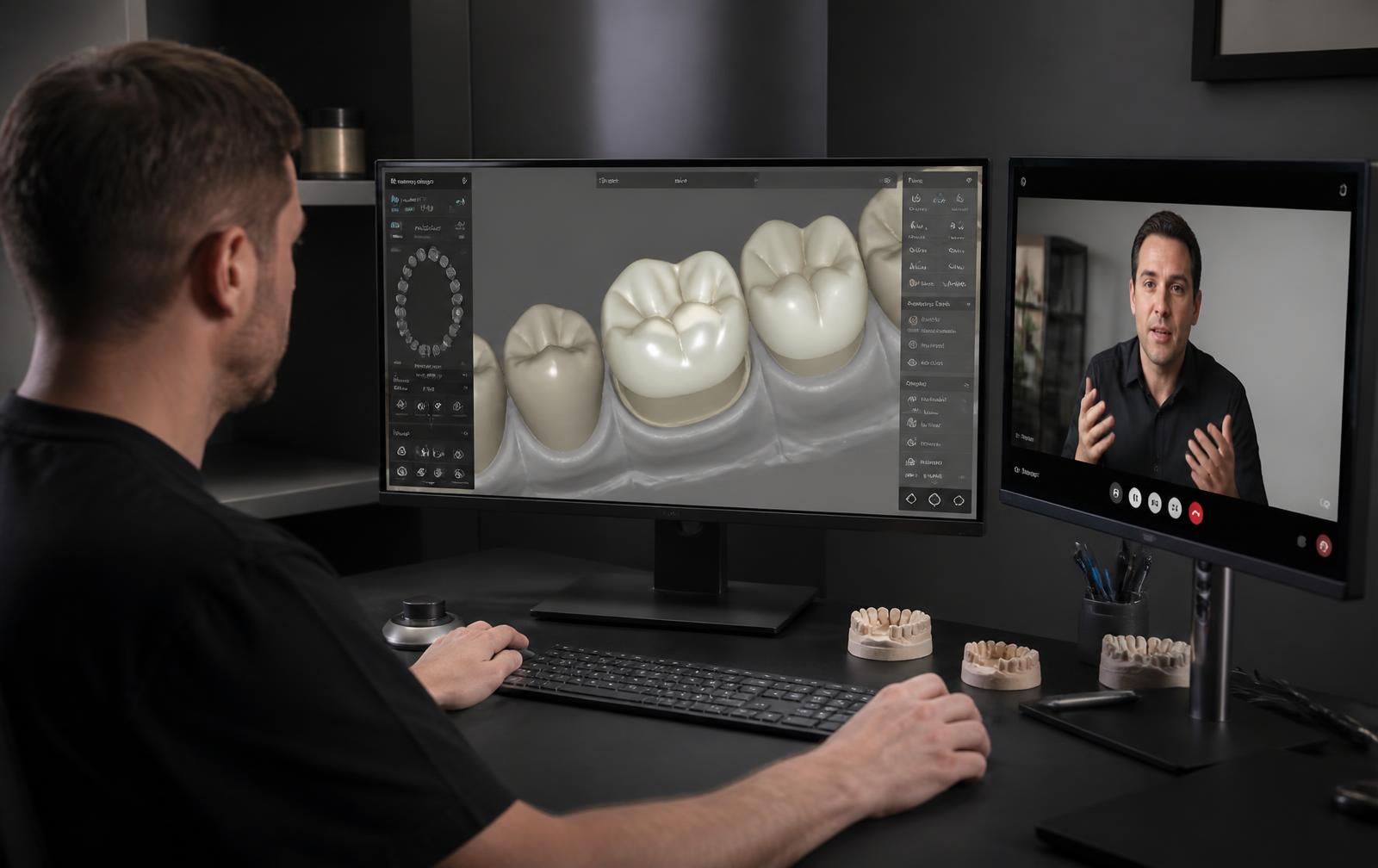
Direct designer communication creates a shorter feedback loop. A clinician can point to a specific area of the case, explain the intended outcome, ask why a design choice was made, and collaborate on the next revision. The result is a workflow based on professional dialogue rather than long chains of written instructions.
Designer-Direct vs. Traditional Case Communication
| Workflow Area | Indirect Communication | Designer-Direct Communication |
|---|---|---|
| Primary contact | Coordinator or case manager | Designer handling the case |
| Design feedback | Relayed through another person | Discussed directly with designer |
| Case questions | Messages may pass through multiple steps | Questions can be addressed in the design conversation |
| Visual discussion | Often dependent on written notes | Screensharing or visual review can support discussion |
| Revision process | May require repeated clarification | Feedback can be discussed in context |
The Clinical Side of the Conversation
A designer-direct relationship does not mean the laboratory replaces the dentist. The dentist remains responsible for diagnosis, treatment planning, and clinical decisions. Instead, the model creates a stronger professional connection between the clinician's treatment goals and the laboratory's technical design work.
The American Dental Association's current policies describe the importance of professional communication and business interaction between dentists and dental laboratories, while keeping clinical and laboratory responsibilities clear. The laboratory can provide technical information that helps support treatment planning, while the dentist remains responsible for overall patient treatment.
Digital Dentistry Makes the Model Even More Useful
Modern digital workflows make direct collaboration more practical. The ADA's digital dentistry resources highlight resources covering digital workflow, imaging, interoperability, AI, and 3D printing, all of which can support more connected communication between dental practices and laboratories.
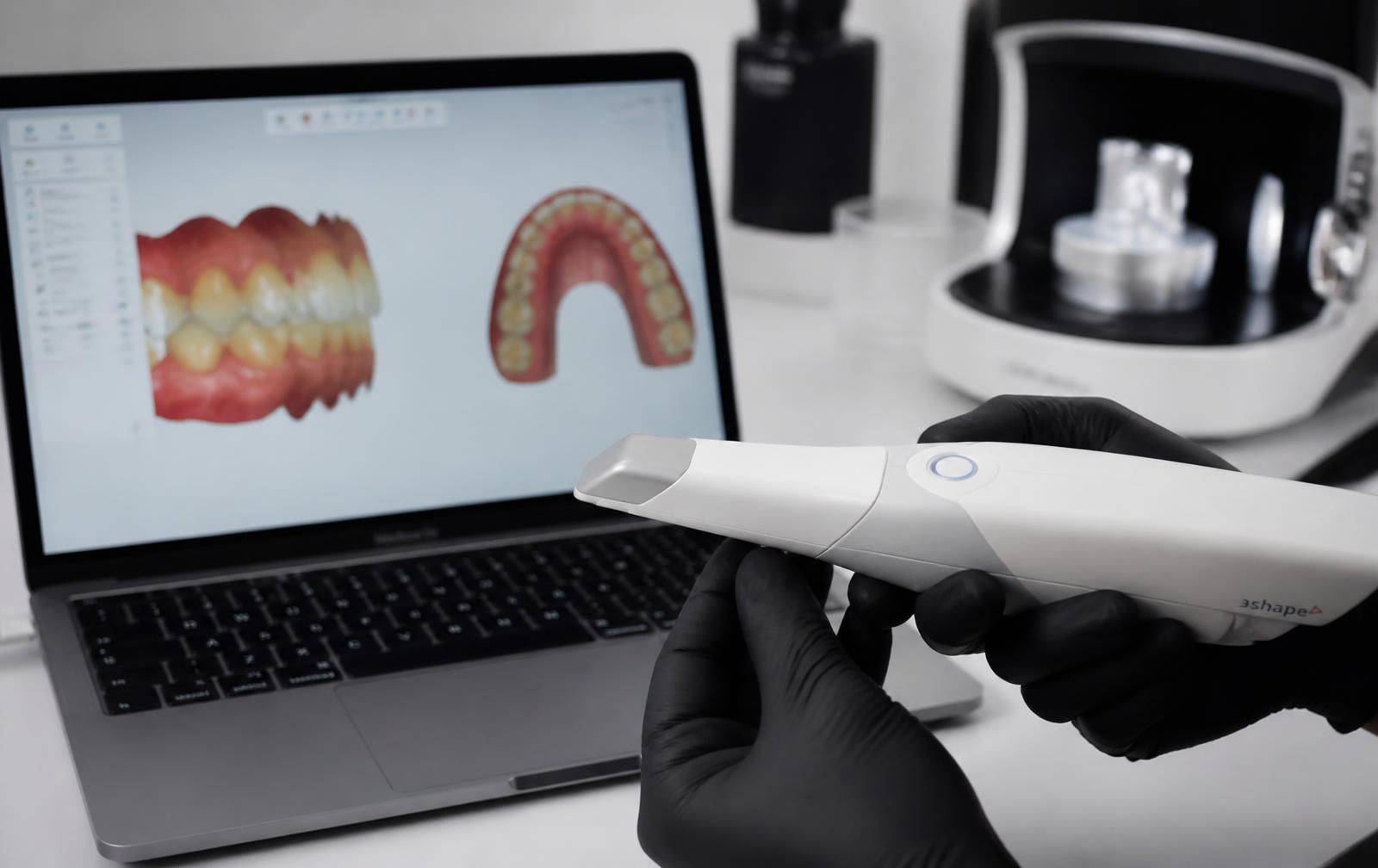
The ADA notes that digital workflows can allow steps to move back and forth between a practice and laboratory depending on the case, tools, and complexity. This flexibility makes communication especially important: the more digitally connected the workflow becomes, the more valuable it is to have professionals who can interpret the same case information and discuss it efficiently.
A useful real-world benchmark is the structure of the U.S. dental laboratory workforce: the ADA notes that an average laboratory employs about five to ten technicians, although laboratory size and specialization vary widely. That range reinforces why knowing who is actually responsible for a case can matter in a collaborative workflow.
A Simple Test: Can You Call the Designer?
The easiest way to evaluate a designer-direct claim is to ask a practical question before starting a case: Can I speak with the designer who will actually work on my case?
If the answer is yes, ask how the conversation works. Can you review a proposed design together? Can you discuss an occlusal concern? Can you clarify an aesthetic preference? Can the designer explain why a particular approach was selected? The answers reveal more about the workflow than the label itself.
What to Look for in a Designer-Direct Partner
| What to Evaluate | Why It Matters |
|---|---|
| Direct access to the designer | Reduces communication layers and supports faster clarification. |
| Digital case review | Makes it easier to discuss scans, CAD designs, photos, and specific areas of a case. |
| Clear case documentation | Keeps clinical instructions and design expectations aligned. |
| Revision communication | Allows feedback to be discussed before the case moves forward. |
| Consistent workflow | Creates repeatable communication habits across restorative cases. |
Designer-Direct Does Not Mean Technology-Only
It is easy to assume that designer-direct is primarily a technology feature. In reality, the strongest benefit is human collaboration supported by technology. A scanner, CAD platform, digital portal, or 3D printer can improve a workflow, but tools alone do not guarantee good communication.
The most useful digital workflow combines accurate case information with people who can interpret it, question unclear details, and make appropriate design adjustments. That combination is particularly valuable for complex restorative and full-arch cases, where small design decisions can have broader functional and aesthetic implications.
Why the Model Matters for Growing Practices
As dental practices adopt more digital tools, laboratory communication becomes part of the overall practice workflow rather than a separate back-office step. A well-connected laboratory relationship can help clinicians establish clearer protocols for scans, photographs, prescriptions, approvals, revisions, and final design decisions.
The goal is not simply to make communication faster. It is to make communication clearer and more useful. When the right professional can answer the right question at the right stage of a case, the entire workflow becomes easier to understand and manage.
Final Thoughts
"Designer-direct" should describe a real working relationship, not simply a marketing phrase. For dentists, the meaningful question is whether the person designing the case is accessible for professional discussion when decisions need clarification.
When direct communication, accurate digital information, clear instructions, and collaborative review come together, the laboratory becomes more than a production endpoint. It becomes an active technical partner in the restorative workflow.
JCR AOX Designs is built around a designer-led approach that helps dental professionals communicate directly with experienced digital design specialists.
Frequently Asked Questions
Ethan Navarro
Hello, I'm Ethan Navarro, a California-based digital dental design specialist with extensive experience supporting clinicians through advanced CAD/CAM workflows, full-arch restorations, implant planning, and restorative design. I'm passionate about helping dental professionals simplify complex cases by combining precision, collaboration, and innovative digital solutions. Through my articles, I share practical insights on digital dentistry, laboratory workflows, restorative techniques, and emerging technologies that help practices improve efficiency, strengthen communication, and deliver predictable patient outcomes.
Work with our team